Technical debt is the future cost and constraint created when expedient implementation or maintenance decisions replace more durable solutions. It consumes investment that could otherwise improve the product, while continued work in legacy systems can worsen system health and increase the eventual cost of modernization. section 1.0
Technical debt is socio-technical, not merely a code-quality problem. Restrictive policies, development processes, organizational decisions, and weak relationships between development and operations can make simple work difficult. Addressing it therefore requires connecting architectural proposals to business outcomes, product strategy, and the investment stakeholders must understand. section 2.1.6 section 3.1.1
A financial services organization falls behind
A long-standing market leader optimized for stability and security while investing little in technical debt. Restrictive processes and poor Dev–Ops relationships frustrated engineers and slowed delivery. When faster competitors offered better user experiences, the organization lost its industry position and began a multiyear modernization initiative. Leadership’s demand for major improvements within six months exposed how technology and organizational debt constrained rapid change. section 3.1.1
Useful questions for making technical debt discussable include:
- What business improvement does the proposed architectural work enable, and what investment does it require? section 2.1.6
- Is a proposed tool or low-code solution addressing the underlying debt, or merely bolting a new layer onto legacy systems? section 2.4.1
- Can decision-makers see the modernization challenges clearly enough to have an honest conversation about trade-offs and timing? section 2.4.1
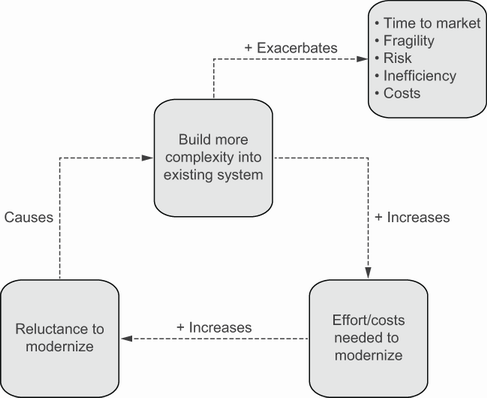
The negative-cycle model shows how declining architecture health increases modernization cost and makes leaders less willing to invest. section 1.0









