A database without an index may scan every row to find one record, like reading a phone book cover to cover. An index gives it a sorted lookup structure to find the record and jump to its location. section 8.5.1
A B-Tree keeps data sorted in balanced, hierarchical blocks. It lets the database skip irrelevant records while supporting searches, sequential access, insertions, and deletions. section 8.5.1
Indexes trade faster reads for slower writes: each INSERT, UPDATE, or DELETE may require maintaining the index. Add indexes to support useful lookups, not automatically to every column. section 8.5.1
Figure 8.10 Indexing: An index allows the database to jump directly to the data instead of scanning every single row.
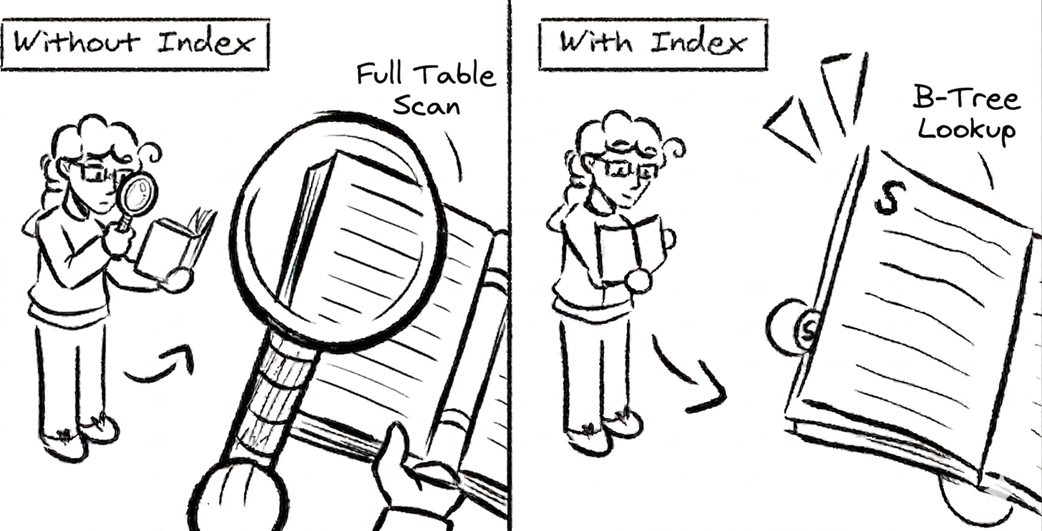
See how an index lets the database jump to a record instead of scanning every row. section 8.5.1
Figure 8.11 The Tradeoff: Indexes speed up reads (finding the file) but slow down writes (you have to file the paper in multiple places).
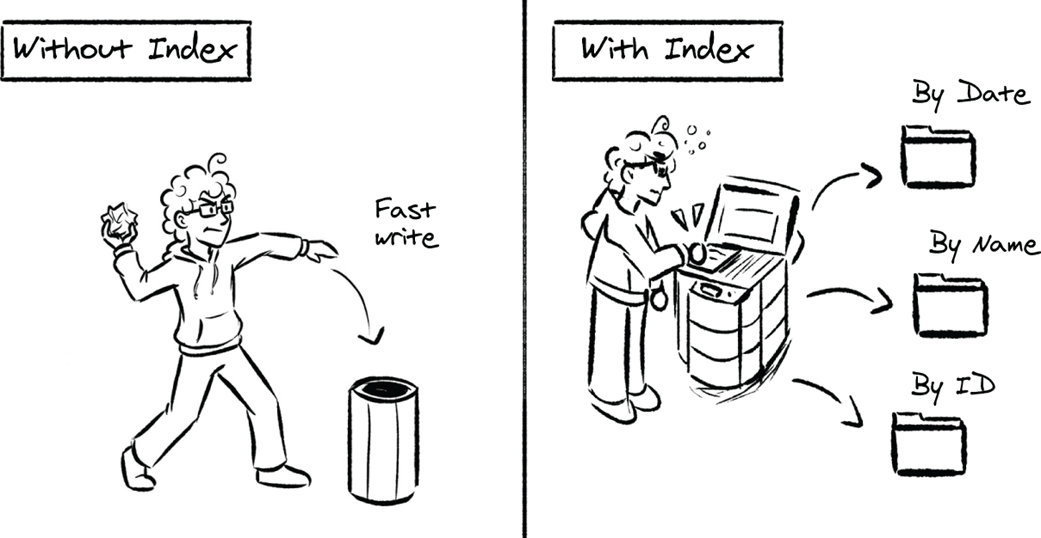
Compare faster reads with the extra work indexes add to writes. section 8.5.1





















