Threat intelligence is collected and processed knowledge about cyber threats from internal and external sources. It helps teams assess threats that occurred, are active, or may emerge, so they can make timely decisions about who might attack and how. Analysts research, analyze, compile, and share this information with teams such as threat hunting. section 2.3 section 13.3.3
Useful intelligence is structured for its audience and actionable for its consumer. Strategic intelligence describes the threat landscape for executives; operational intelligence gives security management and hunters actor context; tactical intelligence details TTPs; and technical intelligence supplies machine-consumable IOCs such as IP addresses, hashes, and URLs. Technical indicators are short-lived, while operational and tactical intelligence are especially useful for building hunts. section 2.3.1 section 13.3.3
Figure 2.1 Threat intelligence types
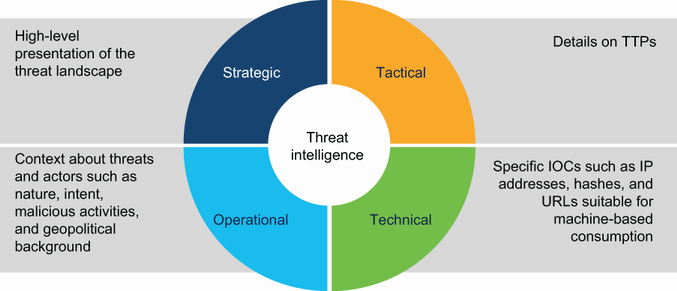
Compare the four intelligence types by audience, level of detail, and intended use. section 2.3.1
Turning a report into a hunt
A report on active exploitation of CVE-2021-24347 in a WordPress file-upload plugin combines vulnerability details, organizational relevance, IOCs, and TTPs. A hunter uses it to create a web-shell hunt: define a hypothesis, scope public web servers, map likely techniques, and search web-access and cloud-firewall events. Findings and newly uncovered TTPs then feed back to the intelligence team. section 4.1.2 section 4.3.1 section 4.6
Use threat intelligence in a repeatable hunting workflow:
- Receive an urgent, actionable report and create a hunting play using its background, indicators, techniques, and affected scope. section 4.3.1
- Check whether available event sources provide enough visibility to answer the hunt’s questions, and record collection or configuration gaps. section 4.4 section 4.6
- Coordinate with threat intelligence, vulnerability management, system administration, and incident response; share findings and escalation information. section 4.6
