Top-down design
Top-down design is an approach that starts with a system, task, or desired outcome at a high level and progressively decomposes it into more specific parts or steps.
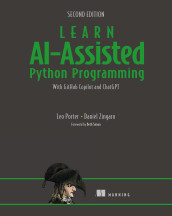
Learn AI-Assisted Python Programming, Second Edition
Top-down design is a software-design technique that starts with an overall task and progressively refines it into smaller subtasks and functions.
- How it is used
- Uses problem decomposition to turn large programming tasks into manageable functions and focused prompts for AI coding tools.
- How deep it goes
- Explains decomposition, stopping points, design alternatives, and bottom-up implementation, while deferring full testing and debugging.
- Examples
- Demonstrates spelling suggestions, image-directory merging, Bulls and Cows, Bogart, and authorship identification.
- What you can do after
- Build programs by decomposing requirements into functions, implementing helpers first, and assembling them into a top-level solution.
Read how Learn AI-Assisted Python Programming, Second Edition explains top-down design →
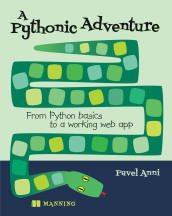
A Pythonic Adventure: From Python basics to a working web app
Top-down design is a development technique that defines a program's overall structure before detailing its component parts.
- How it is used
- Organizes a multi-customer menu by planning its main behavior before implementing individual functions.
- How deep it goes
- Explains planning, function decomposition, placeholders, and implementation, stopping short of deeper design theory.
- Examples
- Uses a café ordering menu, confirmation loop, order dictionary, placeholder functions, and implementation errors.
- What you can do after
- Build it from scratch by planning a program, testing its structure with stubs, and filling in each function.
Read how A Pythonic Adventure: From Python basics to a working web app explains top-down design →
Also covered in
- AI for Everyday IT
- Simple Object-Oriented Design: Create clean, maintainable applications
- Functional Design and Architecture: Examples in Haskell
What to know first
- conversational aiConversational AI is artificial intelligence that enables software systems to interpret user input and interact with users through natural-language dialogue.
- prompt engineeringPrompt engineering is the deliberate design and refinement of inputs, instructions, and context to guide an AI model’s behavior or outputs.
Related concepts
- decompositionequivalent to · Decomposition is the process of dividing a complex problem, task, or system into smaller constituent parts that can be handled or analyzed separately.
- inverted pyramid schemeincludes · A top-down problem-analysis technique that begins with a broad high-level statement and progressively investigates more specific details and nuances.
- designkind of · Design is the process of planning and specifying an artifact’s structure, behavior, or presentation, and the resulting arrangement, to meet intended purposes and constraints.
- functionuses · A function is a callable unit of program code that performs a computation or operation, can accept inputs, and may produce a result or side effect.
Questions about top-down design
What is top-down design?
Top-down design is an approach that starts with a system, task, or desired outcome at a high level and progressively decomposes it into more specific parts or steps.
Which Manning books explain top-down design?
Learn AI-Assisted Python Programming, Second Edition and A Pythonic Adventure: From Python basics to a working web app.
What should I know before learning top-down design?
Manning books that teach top-down design usually introduce bottom-up implementation, conversational ai and prompt engineering first.
What is the difference between top-down design and bottom-up implementation?
Top-down design is an approach that starts with a system, task, or desired outcome at a high level and progressively decomposes it into more specific parts or steps. Bottom-up implementation is an approach that builds a larger system or outcome progressively from lower-level components or contributors.
What kinds of top-down design are there?
Kinds of top-down design include inverted pyramid scheme.
What is top-down design a kind of?
Top-down design is a kind of design. Design is the process of planning and specifying an artifact’s structure, behavior, or presentation, and the resulting arrangement, to meet intended purposes and constraints.
These guides are generated from the text of Manning books by Manning's knowledge graph and link to the sections they draw on. The full books are available on liveBook and at manning.com.