Training data bias is systematic distortion caused by unequal, incomplete, or agenda-driven representation of the people or phenomena a dataset describes. It affects what information a model can learn and must be understood before modeling begins. section 4.5.1 section 1.2
Inspect bias through the data’s collection and combination history:
- Check whether rare cases are overrepresented while common cases, related categories, seasons, locations, or recording fields are missing. section 4.5.1
- Review survey questions, interfaces, response rates, and default choices; willing respondents and first-listed options may be systematically overrepresented. section 4.5.2
- Trace sensor calibration, installation, outages, locations, and validation checks before treating measurements as reliable. section 4.5.2
- Record population, selection protocol, and time period before fusing datasets; controlled samples and operational snapshots can distort population-level conclusions. section 5.4.1
A representative dataset can still be biased
A website survey may accurately describe users willing to disclose sensitive characteristics while underrepresenting people who avoid disclosure. Likewise, annual retail snapshots can appear consistent while shifting trading days between years. section 4.5.2 section 5.4.1
Figure 1.2 Drivers of complexity in an ML project: the domain, the data, and the models
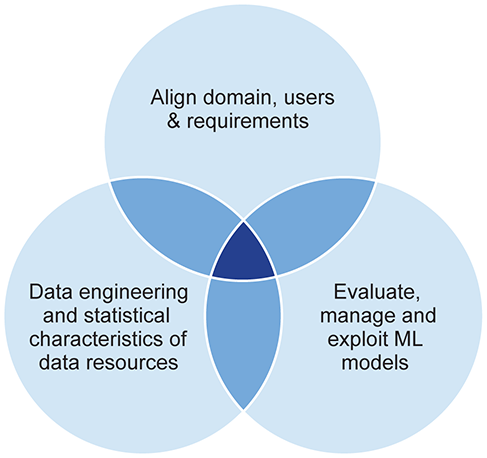
Use the domain–data–model view to place training data bias within the wider sources of ML project complexity. section 1.2


