liveBook · Manning

Trust boundary

As explained in AI Governance

A trust boundary is a division between components or parties across which control, responsibility, or security assumptions change.

A trust boundary marks where control and responsibility shift. In vendor-hosted GenAI applications, the vendor operates the interface, middleware, and model stack, while the organization configures available administrative controls. section 2.2

In a SaaS deployment, responsibilities split across:

  • Vendor-managed components, including the interface and storage or validation layers. section 2.2
  • Organization-managed settings, such as feature access, model selection, prompts, data governance, and API keys. section 2.2

RAG data in SaaS

Vendor-stored retrieval data may be logically segregated by organization; administrators can set retention, anonymization, or purge policies. section 2.2

Figure 2.3 SaaS / Application Adoption Model
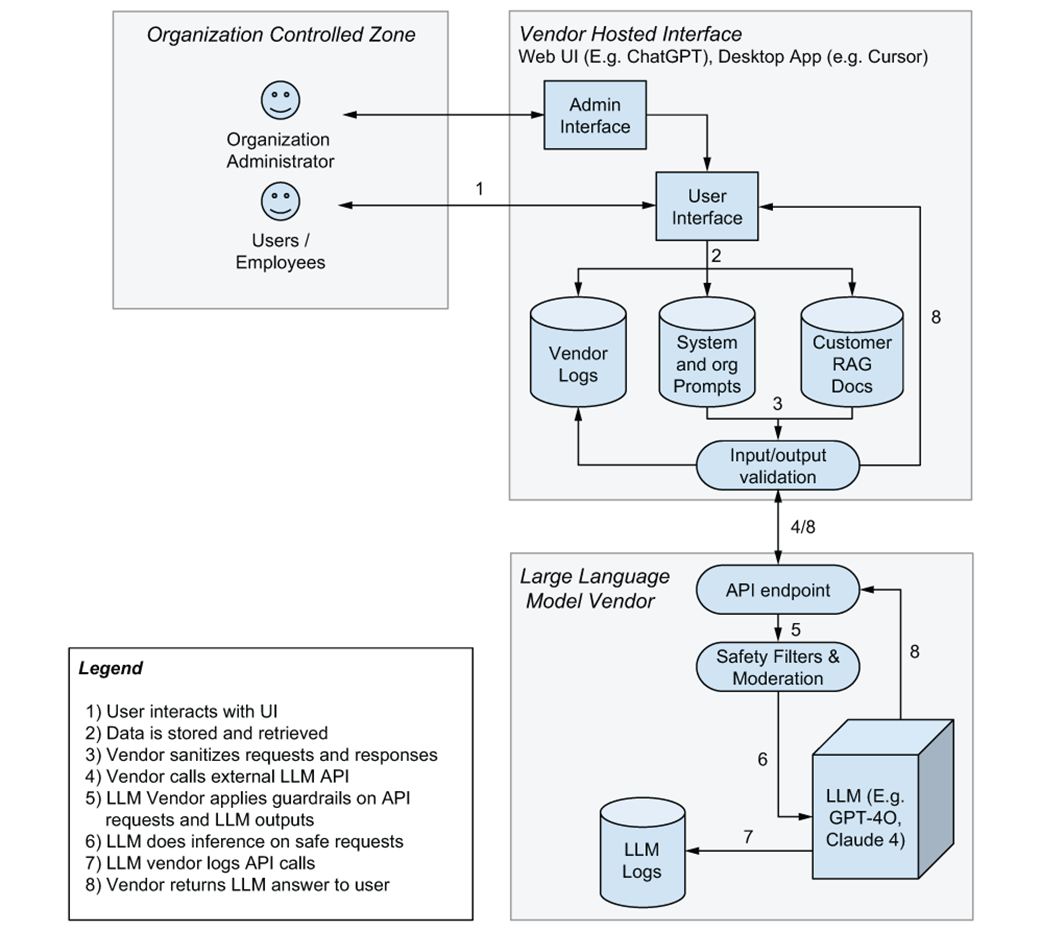
Use the architecture diagram to locate where organizational responsibility gives way to vendor control. section 2.2


How AI Governance covers it

How deep it goes
Maps vendor and organizational responsibilities across SaaS components, without detailing a broader assessment method.
Examples
Uses vendor-hosted applications, administrative settings, and vendor-stored RAG data as concrete cases.
What it assumes
Assumes familiarity with vendor-hosted application adoption and explains the responsibility shift in that setting.
What you can do after
Evaluate which operational controls remain with the organization and which pass to the vendor.
How it connects
Connects trust boundaries with SaaS, retrieval-augmented generation, system prompts, and data governance.

Also explained in

Compare how 3 books explain trust boundary →

Related concepts

This explainer was generated by Manning's knowledge graph from the text of AI Governance. The section links point to the parts of the book it draws on.
