An architecture modernization enabling team (AMET) helps an organization start and sustain architecture modernization while building the capability to continue without it. Modernization competes with business-as-usual work and can stall when teams lack time, shared direction, or design skills. An AMET supports stream-aligned teams and other stakeholders; it is neither a team that does all the modernization work nor a central architecture group that hands down designs. section 15.0 section 15.1.2
Its work changes with the obstacles at hand:
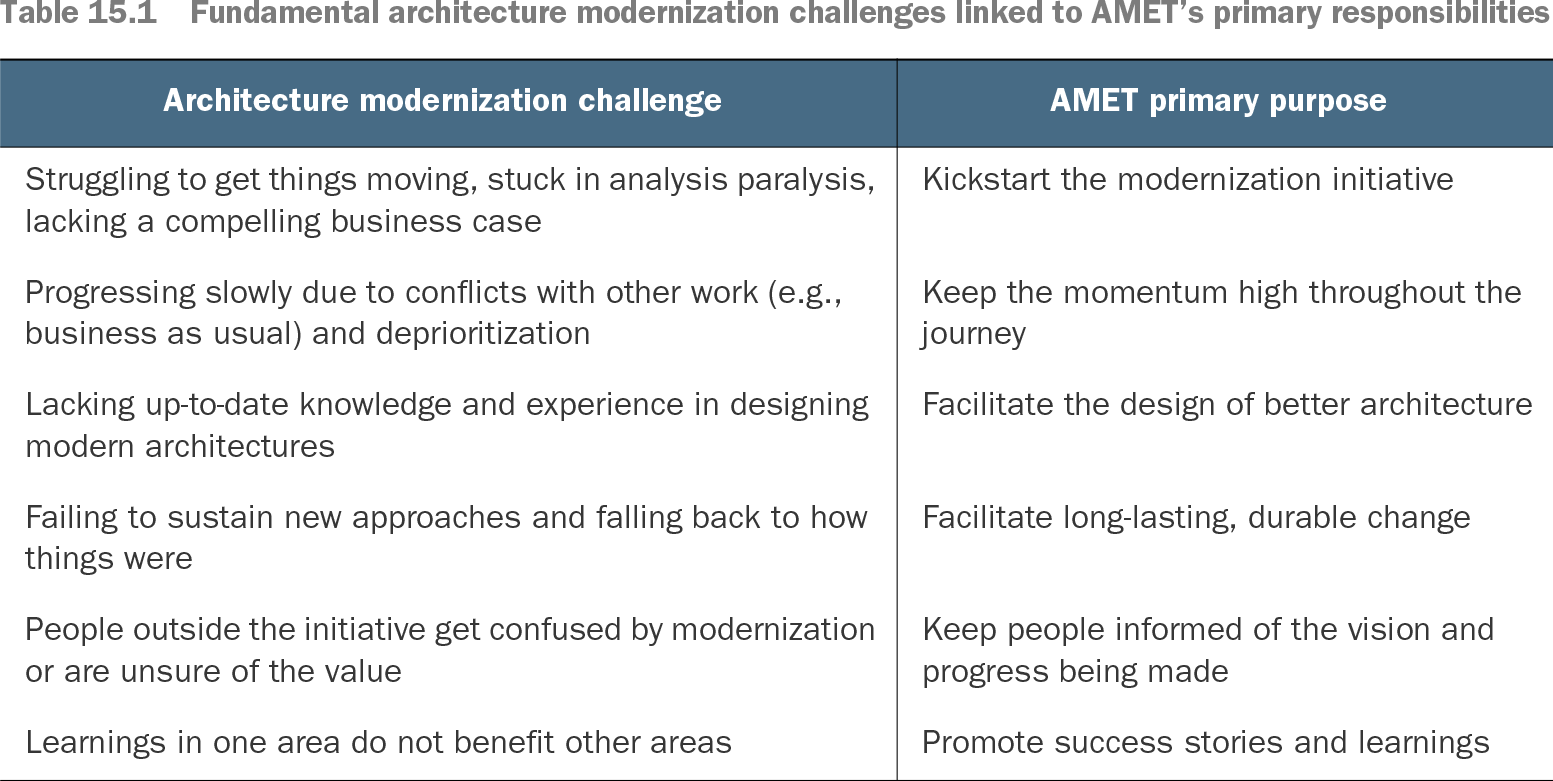
- Kickstart: conduct a listening and mapping tour to understand problems and opportunities before choosing solutions. A workshop can align people on a vision and a first slice of modernization. section 15.1.1
- Sustain momentum: help stakeholders resolve competing priorities, dependencies, slow decisions, and concerns that cross team boundaries. Establish ways for teams to handle recurring obstacles themselves. section 15.1.2
- Improve design capability: notice skills gaps, facilitate design work, and give teams opportunities to learn and practice rather than assuming a new technology will fix an old design. section 15.1.3
- Make change durable: coach teams and leaders, support collaboration, and create practices that survive the departure of the AMET or external experts. section 15.1.4
Table 15.1 Fundamental architecture modernization challenges linked to AMET’s primary responsibilities (view table figure)
The challenge-to-responsibility table helps test whether an AMET has a specific problem to solve, rather than treating the team as a default organizational layer. section 15.1 section 15.7
An internal team at a European telco
A telco formed an operating model exploration team with four people from business and technology roles and an external coach. Rather than outsource the change, the team explored bottlenecks with delivery teams, asked how their boundaries had been chosen, and learned to use Wardley Mapping, Value Stream Mapping, and Team Topologies. The coach helped internal members develop the ability to drive the work themselves. section 15.2
Staff for breadth of expertise and an enabling mindset: members must work with leaders and delivery teams, sometimes lead, and know when to step back. Give the team a clear mission and public backing from senior modernization leaders. Dedication can vary with need, though work treated only as a side project risks losing priority. Name the team for its specific mission so others know when to seek help. section 15.4 section 15.4.2 section 15.5 section 15.6
Treat the AMET as scaffolding, not a permanent owner of architecture. As teams gain capability, reduce its involvement and check that practices still work without its facilitation. Before winding down, establish an enduring architecture operating model: clarify roles, decision-making, and standards. If teams already have strong architectural capability and working relationships, an AMET may be unnecessary. section 15.3.1 section 15.3.2 section 15.7