A type 2 nudge directs attention and reflective thinking, giving people an opportunity to consider both the nudge and their decision. It can reduce cognitive bias by enabling people to decide for themselves how to respond. section 7.3.3
Questioning confirmation bias
When Caelan resisted collaborative modeling and sought evidence supporting his existing beliefs, facilitators asked what evidence could change his mind. The question triggered reflection, potentially reopening dialogue or revealing an unresolved conflict. section 7.3.3
Use a type 2 nudge to:
- Draw attention to a bias affecting an individual or group. section 7.3.3
- Ask a reflective question, such as what evidence could change someone’s mind. section 7.3.3
- Leave people to decide whether and how to respond. section 7.3.3
Figure 7.6 Nudges are organized based on their type and level of transparency. The figure highlights the significance of visually categorizing nudges into quadrants before application. For transparent type II nudges, individuals are informed and provided time to consider whether they wish to respond to the nudge. On the other hand, nudges that fall into the Type I, Nontransparent category are characterized by a lower awareness among people that nudges are being applied. These can potentially manipulate individuals, and the lower they are placed within this quadrant, the more unethical their use becomes. This framework serves as a guide for ethically applying nudges by understanding their effect on awareness and choice.
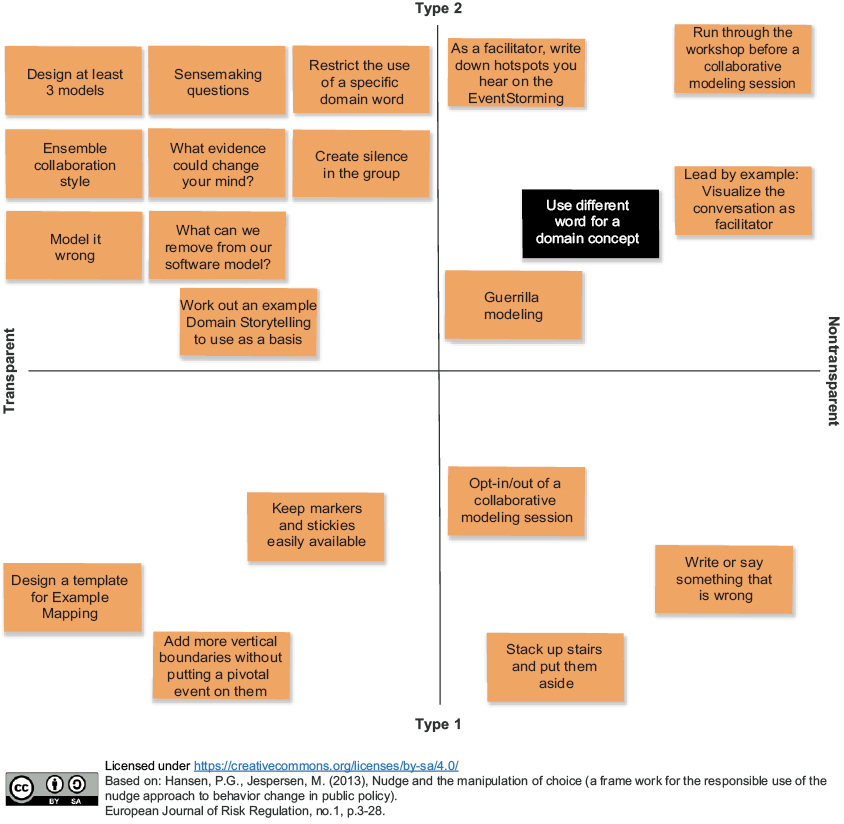
Use the nudge quadrant to distinguish type and transparency; transparent type 2 nudges inform people and give them time to consider their response. section 7.3.3
