liveBook · Manning

UML sequence diagram

As explained in Microservices Patterns, Second Edition

A UML sequence diagram is a diagram that shows participants and the time-ordered interactions between them.

A UML sequence diagram shows a scenario’s participants and their time-ordered interactions. Use it to make collaboration visible, including services and key business entities when that makes the flow more informative. section 3.2.5

Creating an order

For FTGO’s createOrder() operation, the diagram shows the API Gateway, Order Service, Consumer Service, and Kitchen Service collaborating, along with key classes such as Order, Consumer, and Restaurant. section 3.2.5

Figure 3.12 A sequence diagram for the createOrder() operation that shows how the API Gateway, Order Service, Consumer Service, and Kitchen Service collaborate to implement the operation
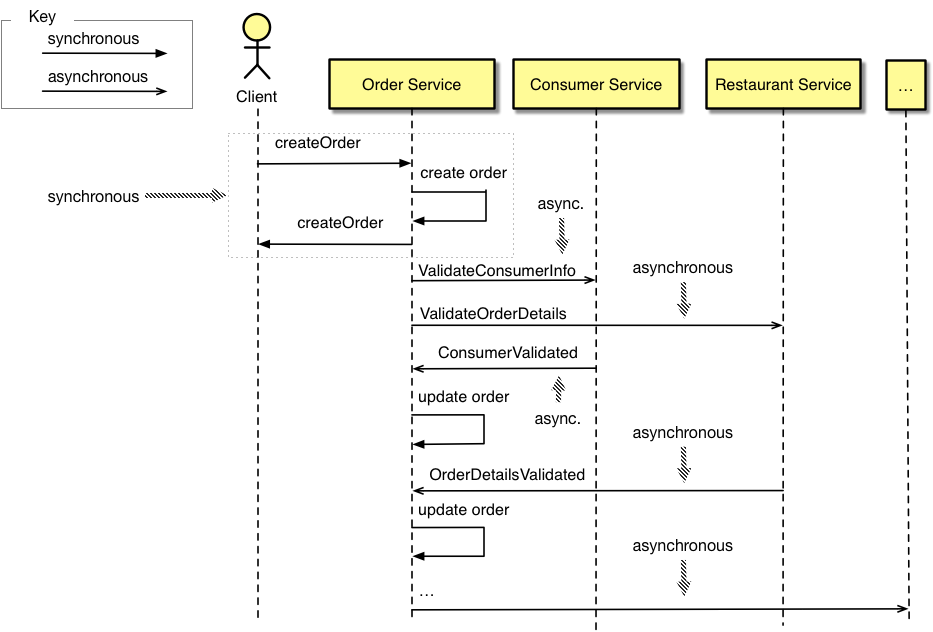
self contained order taking

See the createOrder() interactions across services and key classes. section 3.2.5

How Microservices Patterns, Second Edition covers it

How deep it goes
Defines the diagram and illustrates a service-level scenario with key classes, without detailing notation or construction steps.
Examples
Shows FTGO services and business classes collaborating during the createOrder() operation.
What you can do after
Understand how services and business entities collaborate to implement an operation.
How it connects
Connects scenarios to software architecture views and contrasts sequence diagrams with collaboration diagrams and service blueprints.

Also explained in

Compare how 3 books explain UML sequence diagram →

Related concepts

This explainer was generated by Manning's knowledge graph from the text of Microservices Patterns, Second Edition. The section links point to the parts of the book it draws on.

