User engagement measures how frequently, how long, and how intensely people interact with a product or service. For a chatbot, it turns usage into observable signals rather than treating signups alone as evidence of value. section 12.7.3
Useful engagement measures include:
- interaction frequency, such as how often users return to the chatbot; section 12.7.3
- session duration and intensity, including time spent chatting and the number of questions asked; section 12.7.3
- learning activity, such as lessons visited, lessons completed per session, and sessions across user groups. section 12.7.3
Engagement is useful for understanding whether users reach and use features, but it is only a proxy for value. Task success metrics may matter more: an educational chatbot should ultimately help students master the targeted skills. section 12.7.3 section 12.7.1
Math tutor chatbot
Track how many students enter lessons, how many lessons they complete in each session, how many questions they ask, and how often they return. Interpret those figures alongside quizzes or other measures of skill mastery. section 12.7.3
Figure 12.7 Sankey diagram of lesson funnels
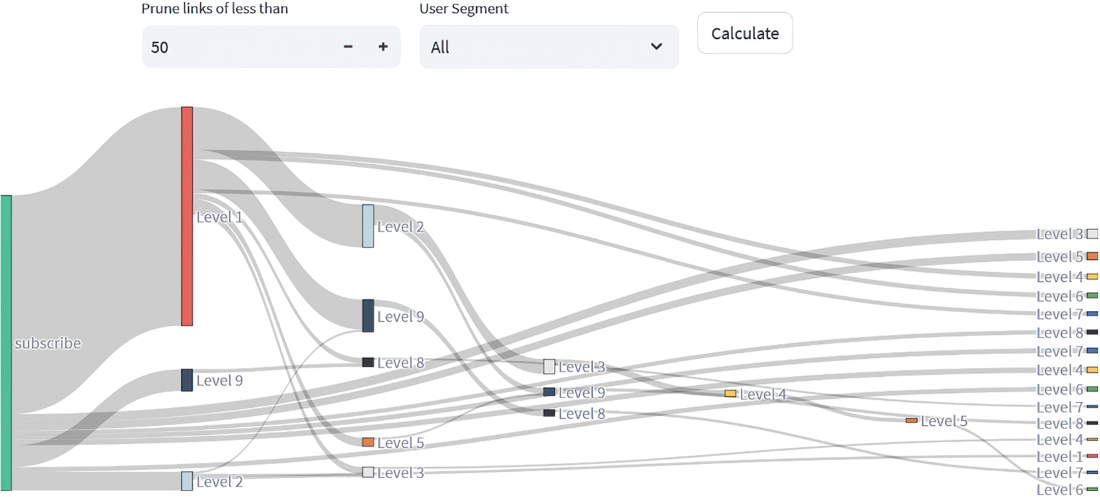
Use the Sankey diagram of lesson funnels to inspect how users progress through learning activities. section 12.7.3




