A value proposition states what an organization offers customers and why they choose it instead of a competitor. It anchors the offerings section of the Business Model Canvas and helps shape the remaining sections. section 2.3.1
Discover value propositions by asking:
- What are we offering the customer? section 2.3.1
- Why would customers use our products or services? section 2.3.1
Start the canvas with value propositions, then clarify customer segments, customer relationships, channels, infrastructure, and finances. This connects customer choice to communication, activities, resources, partners, costs, and revenue. section 2.3.1
BigScreen canvas
A finished BigScreen Business Model Canvas uses a sticky-note color legend and captures the domain language and knowledge discovered while validating the business model with domain experts. section 2.3.1
Figure 2.7 The four sections of the Business Model Canvas tool. This canvas gives us an understanding of what we offer, who we offer it to, what we need to do to succeed, and what finances we have.
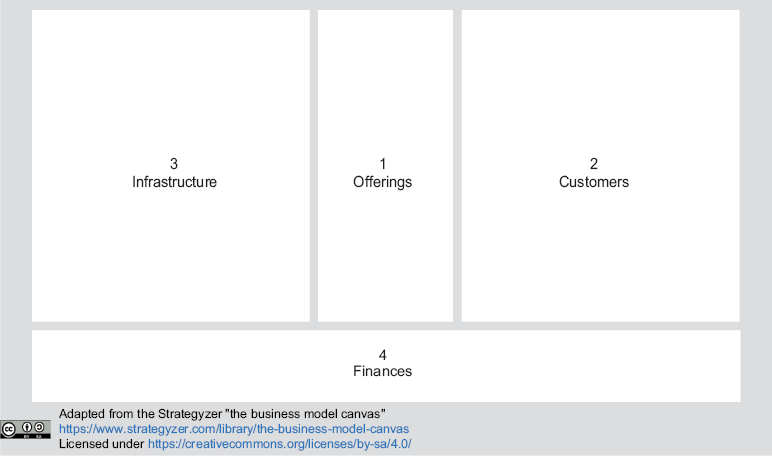
Use the Business Model Canvas overview to relate offerings and value propositions to customers, infrastructure, and finances. section 2.3.1
