A verifier is a deterministic gate that checks generated work against an executable specification. A CI/CD pipeline can enforce those rules without relying on model consistency, prompt quality, or human approval under time pressure. section 1.3
Disciplined verification replaces appealing but unreliable shortcuts:
- Treat the executable specification as the authority for plans, tasks, tests, and verification gates. section 1.3
- Use an impartial, repeatable gate to check artifacts and diffs rather than trusting generated code because it looks acceptable. section 1.3
- Choose the underlying model for cost, speed, or style only after correctness and safety are enforced externally. section 1.3
Figure 1.1 The vibe engineering loop carries a feature from open-ended exploration through an executable specification and an iterating verification gate to tested, team-owned code.
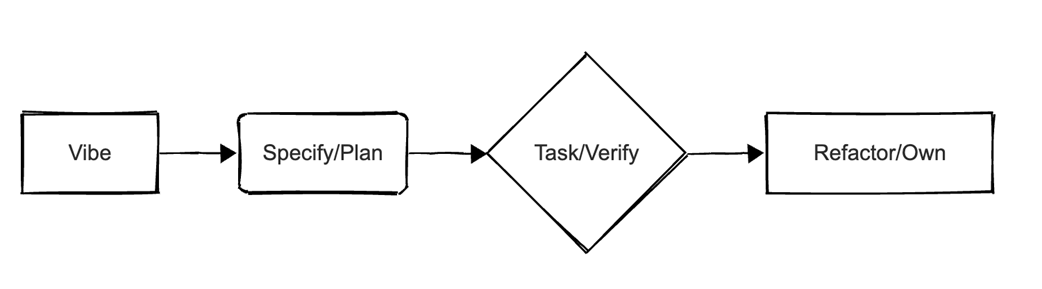
The verification gate appears as the loop’s transition from executable specification to tested, team-owned code. section 1.3








