liveBook · Manning

Vertical

As explained in Architecture Modernization: Socio-technical alignment of software, strategy, and structure

A vertical is a business area organized around a market, region, product line, or other distinct domain of responsibility.

A vertical is a business area organized around a distinct market, region, product line, or domain of responsibility. In a large organization, verticals may own capabilities independently while sharing selected horizontal capabilities. section 6.3.6 section 9.2.5

Designing verticals means balancing local optimization against reuse and coordination. Key questions concern consistent user experience, prioritization across verticals, funding shared capabilities, dependency-driven cognitive load, and efficiency versus time-to-market. section 6.3.6

Fast-food regional markets

A global fast-food chain might organize around regional verticals such as the United States, United Kingdom, Sweden, and Japan. Each region could develop Loyalty and CRM independently, or use centralized horizontal capabilities shared across markets. section 6.3.6

BBC WebCore

BBC initially aligned high-level domains with independently grown services such as news, radio streaming, sports, weather, and education. WebCore later identified horizontal domains such as Articles, Search, and Topics so audience-facing verticals could reuse shared capabilities. section 9.2.5
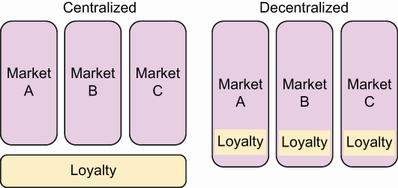
Figure 6.12 Centralized versus decentralized macrostructure

Compare centralized and decentralized macrostructures when deciding which capabilities belong inside verticals or in shared horizontals. section 6.3.6


How Architecture Modernization: Socio-technical alignment of software, strategy, and structure covers it

How deep it goes
Compares centralization trade-offs and shows how domain boundaries can evolve, without specifying implementation techniques.
Examples
Uses regional fast-food markets and BBC digital services to illustrate decentralized ownership, shared capabilities, and boundary redesign.
What you can do after
Evaluate vertical-horizontal trade-offs involving user experience, prioritization, funding, dependencies, cognitive load, efficiency, and time-to-market.
How it connects
Links verticals to horizontals, domain boundaries, business architecture, team organization, user experience, and socio-technical architecture.

Also explained in

Compare how 2 books explain vertical →

Related concepts

This explainer was generated by Manning's knowledge graph from the text of Architecture Modernization: Socio-technical alignment of software, strategy, and structure. The section links point to the parts of the book it draws on.