A virtual private network (VPN) creates an authenticated, encrypted connection through an otherwise untrusted network such as the public internet. It encrypts data before transmission and decrypts it at the destination, helping prevent interception, monitoring, and alteration. section 11.8.6
Common VPN arrangements and technologies include:
- Remote-access VPNs connect an employee or other device to a trusted organizational network and shield traffic from eavesdroppers. section 11.8.6
- Site-to-site VPNs connect two trusted networks through an encrypted tunnel; IPsec tunnel mode conceals internal addressing by encrypting and encapsulating the original IP packet. section 11.8.6
- IPsec provides confidentiality, integrity, and authentication; NAT traversal places IPsec traffic inside UDP packets, while L2TP can provide tunneling alongside IPsec protection. section 11.8.6
- Avoid PPTP in production because known cryptographic vulnerabilities make it insecure. section 11.8.6
Connecting from a remote location
An employee connects to the company network over a VPN while away from the office. The VPN encrypts the employee’s internet traffic, reducing the risk that eavesdroppers can read the communication. section 11.8.6
Figure 11.16 Illustration of a VPN remote access connection
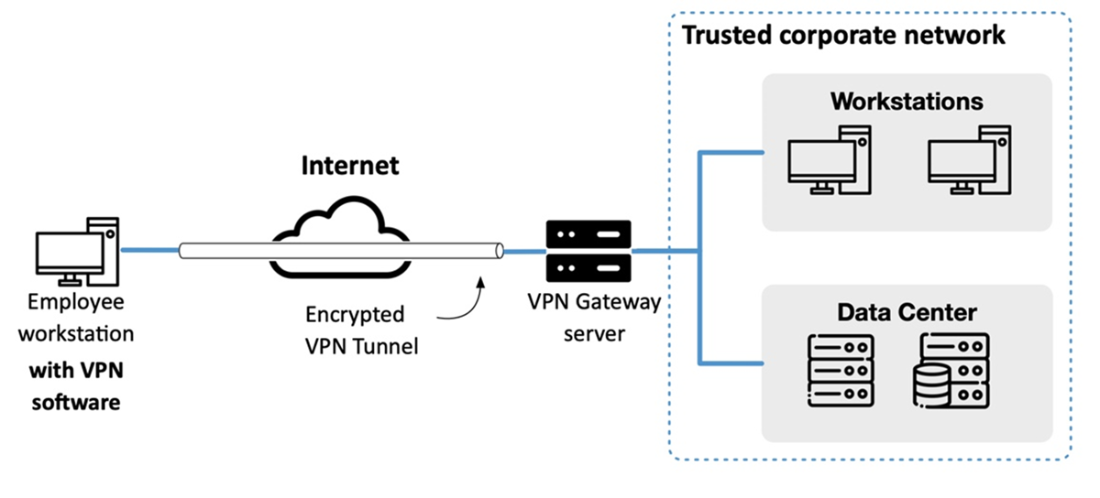
Use the remote-access diagram to trace how an off-site device reaches a trusted network through an encrypted VPN connection. section 11.8.6

