A visual collaboration tool makes ideas, assumptions, decisions, and domain knowledge visible so stakeholders can explore a complex problem together. Each tool offers a particular perspective rather than serving as a universal solution; combining perspectives can reveal alternatives and clarify trade-offs. section 2.3 section 2.1.3
Choose and use a tool by considering:
- The question being explored: different maps or models address different aspects of a problem. section 2.3
- The group’s experience: beginners can start with a simple tool that produces quick results in a familiar solution space. section 2.3.5
- The tool’s collaborative qualities: use a low-learning-curve format that can be moved, adapted, and recreated across sessions. section 2.1.3
- The language in the room: question ambiguous terms, distinguish overlapping concepts, and agree on shared terminology. section 2.1.3
Choosing a route to the Rijksmuseum
A metro map can plan transfers but cannot show the fastest cycling route or nearby destinations. Compare it with other maps to discuss time, cost, and alternative solutions. section 2.3
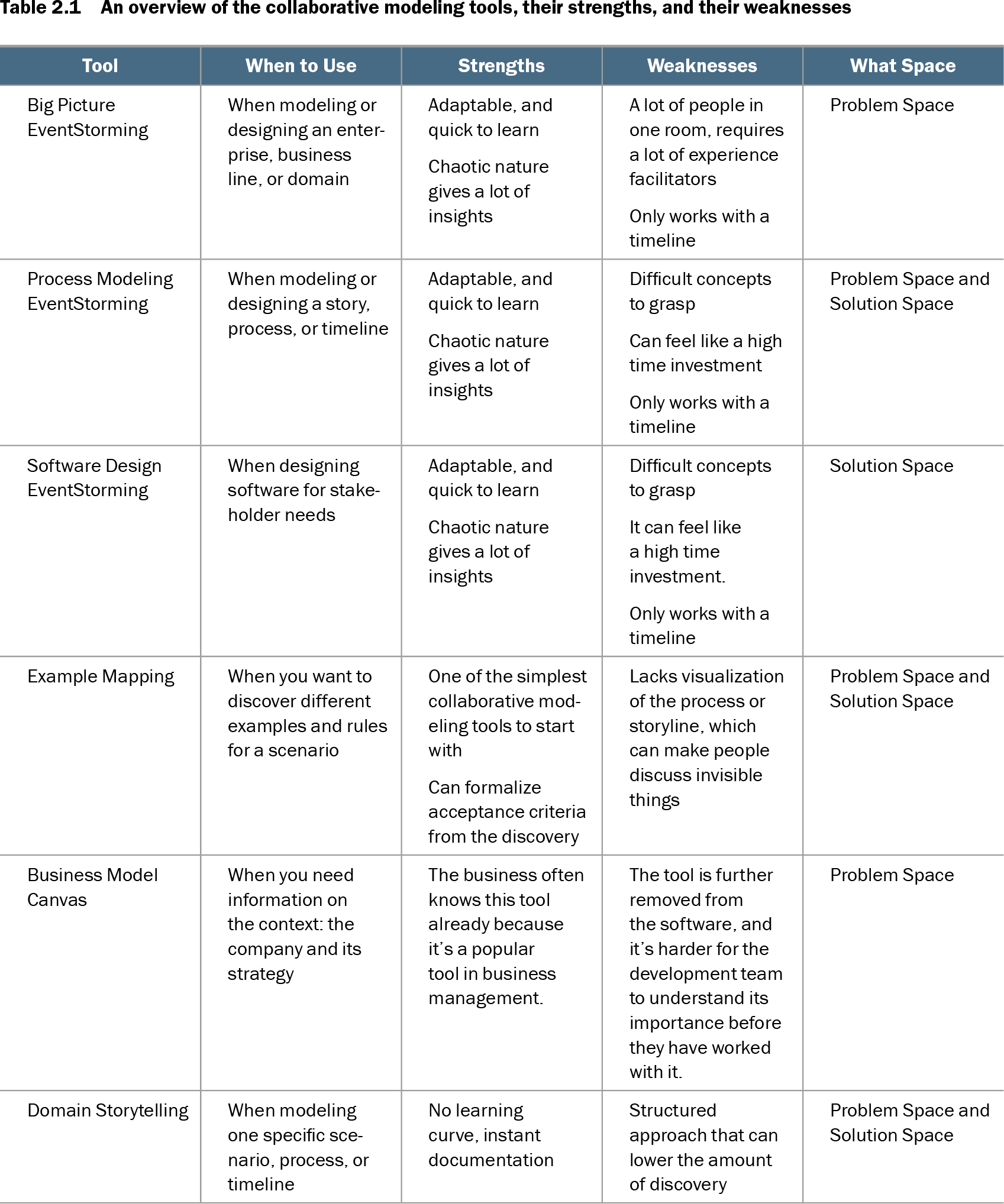
Table 2.1 An overview of the collaborative modeling tools, their strengths, and their weaknesses (view table figure)
| Tool |
When to Use |
Strengths |
Weaknesses |
What Space |
|---|---|---|---|---|
| Big Picture EventStorming |
When modeling or designing an enterprise, business line, or domain |
Adaptable, and quick to learn Chaotic nature gives a lot of insights |
A lot of people in one room, requires a lot of experience facilitators Only works with a timeline |
Problem Space |
| Process Modeling EventStorming |
When modeling or designing a story, process, or timeline |
Adaptable, and quick to learn Chaotic nature gives a lot of insights |
Difficult concepts to grasp Can feel like a high time investment Only works with a timeline |
Problem Space and Solution Space |
| Software Design EventStorming |
When designing software for stakeholder needs |
Adaptable, and quick to learn Chaotic nature gives a lot of insights |
Difficult concepts to grasp It can feel like a high time investment. Only works with a timeline |
Solution Space |
| Example Mapping |
When you want to discover different examples and rules for a scenario |
One of the simplest collaborative modeling tools to start with Can formalize acceptance criteria from the discovery |
Lacks visualization of the process or storyline, which can make people discuss invisible things |
Problem Space and Solution Space |
| Business Model Canvas |
When you need information on the context: the company and its strategy |
The business often knows this tool already because it’s a popular tool in business management. |
The tool is further removed from the software, and it’s harder for the development team to understand its importance before they have worked with it. |
Problem Space |
| Domain Storytelling |
When modeling one specific scenario, process, or timeline |
No learning curve, instant documentation |
Structured approach that can lower the amount of discovery |
Problem Space and Solution Space |
Use the strengths-and-weaknesses overview as a starting point for matching collaborative modeling tools to the problem space, timeline, group, and facilitation demands. section 2.3.5