With statement
A with statement is Python syntax that executes a block under a context manager’s control and invokes its entry and exit behavior.
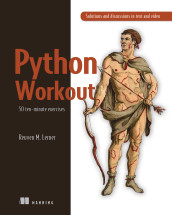
Python Workout: 50 ten-minute exercises
A Python compound statement that manages one or more context-managed objects and ensures their cleanup when the block exits.
- How it is used
- Uses managed blocks to open, process, and reliably close files during reading, writing, and file transformation.
- How deep it goes
- Explains block scope, automatic closing, flushing, multiple managed objects, and binary modes, but defers context-manager implementation details.
- Examples
- Demonstrates line counting, binary chunk reading, CSV conversion, and reversing lines between separate files.
- What you can do after
- Apply it via Python file operations to close resources, flush output, and transform data between separate files.
Read how Python Workout: 50 ten-minute exercises explains with statement →

Python Workout, Second Edition
A with statement is Python syntax that executes a block under the management of a context manager and invokes the manager's entry and exit behavior.
- How it is used
- Manages file lifetimes while reading, writing, and transforming data inside block-scoped workflows.
- How deep it goes
- Explains multiple managed objects plus automatic closing and flushing, while focusing on files rather than context-manager protocol internals.
- Examples
- Uses paired input-output files, reversed lines, /etc/passwd parsing, and CSV reader-writer transformations.
- What you can do after
- Operate/configure file workflows that close and flush resources automatically after the managed block.
Read how Python Workout, Second Edition explains with statement →
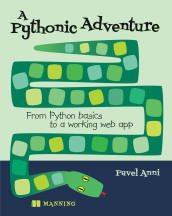
A Pythonic Adventure: From Python basics to a working web app
A with statement is a Python compound statement that manages a context and performs defined cleanup when leaving that context.
- How it is used
- Manages file resources during menu reading and guarantees cleanup after use.
- How deep it goes
- Explains the cleanup benefit and demonstrates the with open pattern, but does not develop context-manager internals.
- Examples
- Uses a read_menu function that opens a menu file, strips its lines, and handles missing or inaccessible files.
- What you can do after
- Apply it via Python's with open pattern to close files reliably after reading.
Read how A Pythonic Adventure: From Python basics to a working web app explains with statement →

Python How-To
A with statement is Python syntax that manages a context-bound operation and invokes the context manager's cleanup behavior when the block exits.
- How it is used
- Manages files, database connections, forms, and other shared resources whose cleanup or scope should happen automatically.
- How deep it goes
- Defines the head, indented body, resource release, and file-mode variations, but does not explain context-manager implementation internals.
- Examples
- Demonstrates reading, writing, appending, logging-file inspection, database operations, and Streamlit task-entry forms.
- What you can do after
- Apply automatic cleanup through with when reading, writing, appending, or otherwise operating on context-managed resources.
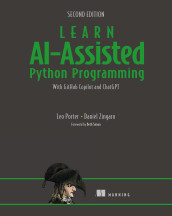
Learn AI-Assisted Python Programming, Second Edition
A with statement manages a context-bound resource by entering its context before a block and reliably exiting it afterward.
- How it is used
- Uses automatic file closure while reading and processing CSV data.
- How deep it goes
- Explains automatic closure and contrasts it with manual close(), without examining context-manager internals.
- Examples
- Demonstrates NFL statistics processing and rewriting a quarterback-printing function to use with.
- What you can do after
- Apply it via Python file handling to close files automatically after a processing block.
Read how Learn AI-Assisted Python Programming, Second Edition explains with statement →

The Quick Python Book, Fourth Edition
A with statement is a Python control-flow construct that establishes a context manager-controlled block and performs its exit actions when the block ends.
- How it is used
- Uses context managers to wrap resource operations and guarantee routine cleanup at block exit.
- How deep it goes
- Explains syntax, exception-safe cleanup, multiple managers, and multiline form, but defers custom-manager construction to contextlib documentation.
- Examples
- Demonstrates reading files, copying between files, explicit try-finally cleanup, and parenthesized multiline managers.
- What you can do after
- Apply it via Python’s context-manager protocol to read or write files while ensuring cleanup after success or failure.
Read how The Quick Python Book, Fourth Edition explains with statement →
Also covered in
What to know first
- CSVCSV is a text format for tabular data in which records contain fields separated by commas, with conventions for quoting fields that contain special characters.
- exceptionAn exception is a runtime signal or value representing an abnormal condition that interrupts ordinary program flow and can be handled or propagated.
- loopA loop is a programming-language control-flow construct that repeatedly executes a block of instructions according to an iteration rule or continuation condition.
- stringA string is a programming-language value representing textual data as an ordered sequence of characters or encoded units.
Related concepts
- context manageruses · A context manager is a programming construct or object protocol that establishes a managed execution context, performing setup when a block is entered and cleanup when it exits.
- file descriptorconfigures · A file descriptor is an operating-system identifier for an open file, socket, pipe, or other input-output resource.
- context managementuses · Context management is the deliberate control of information or resources available and maintained within an execution or interaction.
- decoratoralternative to · A decorator is a programming-language construct that adds metadata or behavior to, or transforms, a program declaration, often a function or class.
- statementkind of · A statement is a syntactic unit in a programming or query language that expresses an instruction, declaration, or control operation for a processor to execute.
- lockinguses · Locking is a synchronization technique that controls concurrent access to a shared resource or protected operation.
Questions about with statement
What is with statement?
A with statement is Python syntax that executes a block under a context manager’s control and invokes its entry and exit behavior.
Which Manning books explain with statement?
Python Workout: 50 ten-minute exercises, Python Workout, Second Edition, A Pythonic Adventure: From Python basics to a working web app, Python How-To, Learn AI-Assisted Python Programming, Second Edition and The Quick Python Book, Fourth Edition.
What should I know before learning with statement?
Manning books that teach with statement usually introduce CSV, exception, loop and string first.
What is the difference between with statement and decorator?
A with statement is Python syntax that executes a block under a context manager’s control and invokes its entry and exit behavior. A decorator is a programming-language construct that adds metadata or behavior to, or transforms, a program declaration, often a function or class.
What is with statement a kind of?
With statement is a kind of statement. A statement is a syntactic unit in a programming or query language that expresses an instruction, declaration, or control operation for a processor to execute.
What is with statement also called?
With statement is also called with block.
These guides are generated from the text of Manning books by Manning's knowledge graph and link to the sections they draw on. The full books are available on liveBook and at manning.com.