Conflict is a disagreement or tension between people, often revealed through competing approaches, unmet expectations, or differing viewpoints. In a team, resolving it means listening to every side, staying open-minded, and keeping the team’s success ahead of personal credit. section 3.1.3 section 11.6.3
Handle workplace conflict by:
- Recognizing unspoken tension through changes in body language, tone, behavior, or willingness to listen. section 3.1.3
- Meeting with struggling team members promptly, then bringing the people involved together when appropriate. section 11.2.2
- Listening to both sides without judgment and encouraging open communication toward a mutually beneficial resolution. section 3.1.3 section 11.2.2
- Accepting compromise, forgiving mistakes, and addressing disagreements respectfully rather than avoiding difficult conversations. section 11.2.2 section 11.6.3
A missed-deadline conflict
One team member’s illness caused repeated deadline changes, while another became upset without knowing the reason. The manager acknowledged the missed contingency planning, avoided pressing for private details, brought the teammates together, and developed a workable plan. Over time, the team rebuilt collaboration and welcomed the person back after leave. section 11.2.2
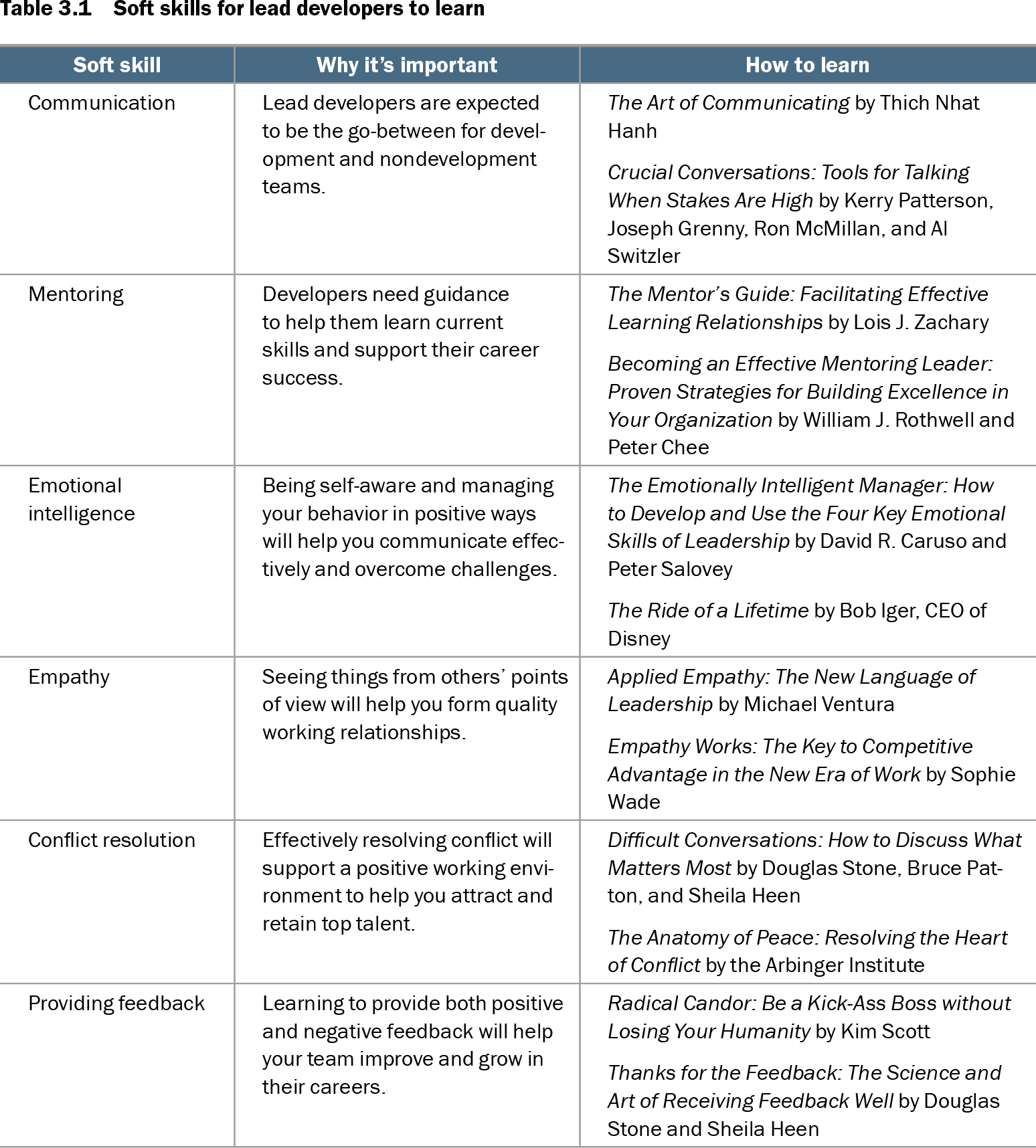
Table 3.1 Soft skills for lead developers to learn (view table figure)
| Soft skill |
Why it’s important |
How to learn |
|---|---|---|
| Communication |
Lead developers are expected to be the go-between for development and nondevelopment teams. |
The Art of Communicating by Thich Nhat Hanh Crucial Conversations: Tools for Talking When Stakes Are High by Kerry Patterson, Joseph Grenny, Ron McMillan, and Al Switzler |
| Mentoring |
Developers need guidance to help them learn current skills and support their career success. |
The Mentor’s Guide: Facilitating Effective Learning Relationships by Lois J. Zachary Becoming an Effective Mentoring Leader: Proven Strategies for Building Excellence in Your Organization by William J. Rothwell and Peter Chee |
| Emotional intelligence |
Being self-aware and managing your behavior in positive ways will help you communicate effectively and overcome challenges. |
The Emotionally Intelligent Manager: How to Develop and Use the Four Key Emotional Skills of Leadership by David R. Caruso and Peter Salovey The Ride of a Lifetime by Bob Iger, CEO of Disney |
| Empathy |
Seeing things from others’ points of view will help you form quality working relationships. |
Applied Empathy: The New Language of Leadership by Michael Ventura Empathy Works: The Key to Competitive Advantage in the New Era of Work by Sophie Wade |
| Conflict resolution |
Effectively resolving conflict will support a positive working environment to help you attract and retain top talent. |
Difficult Conversations: How to Discuss What Matters Most by Douglas Stone, Bruce Patton, and Sheila Heen The Anatomy of Peace: Resolving the Heart of Conflict by the Arbinger Institute |
| Providing feedback |
Learning to provide both positive and negative feedback will help your team improve and grow in their careers. |
Radical Candor: Be a Kick-Ass Boss without Losing Your Humanity by Kim Scott Thanks for the Feedback: The Science and Art of Receiving Feedback Well by Douglas Stone and Sheila Heen |
Use the soft-skills table to connect conflict resolution with communication, emotional intelligence, empathy, and other lead-developer capabilities. section 3.1.2