A2A
A2A is an open interoperability protocol that enables software agents to discover, communicate, and coordinate with one another across systems.
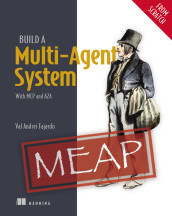
Build a Multi-Agent System (from Scratch)
The Agent2Agent protocol is an open standard for communication and collaboration between software agents, including agents built with different frameworks.
- How it is used
- Enables multi-agent systems to discover and delegate tasks to remote agents built with different frameworks.
- How deep it goes
- Explains discovery, task execution, and client-server integration, while deferring full protocol capabilities such as security and multi-tenancy.
- Examples
- Uses a remote LangGraph preprocessing agent and an LLMAgent client-server integration to illustrate interoperability.
- What you can do after
- Builds client and server integrations from scratch to dispatch remote agents and expose an LLMAgent to other clients.
Read how Build a Multi-Agent System (from Scratch) explains A2A →
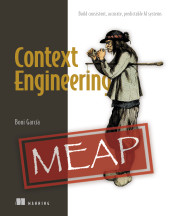
Context Engineering
A2A is an open protocol standard for interoperability and context exchange between independent agentic applications.
- How it is used
- Standardizes delegation and context exchange across independently implemented agents.
- How deep it goes
- Explains agent roles, cards, discovery, and task-oriented exchange, then demonstrates a simplified nonconformant client and server.
- Examples
- Uses travel-planning delegation and a weather-forecast client and server to illustrate context sharing.
- What you can do after
- Evaluate/understand agent discovery and task exchange, and identify production requirements omitted from a simplified implementation.
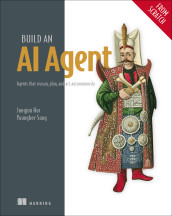
Build an AI Agent (From Scratch)
The A2A protocol is an HTTP-based open protocol for discovering and coordinating remote AI agents through standardized agent cards, task requests, and responses.
- How it is used
- Connects specialized agents across networks when direct in-process composition is impractical.
- How deep it goes
- Explains agent cards, task exchange, and server and client integration through illustrative code, while deferring complete implementation details and advanced features.
- Examples
- Uses a math specialist’s agent card and executor, plus remote-agent registrations for transfer and tool-based orchestration.
- What you can do after
- Apply it via the A2A library to expose an agent and integrate a remote agent into existing orchestration patterns.
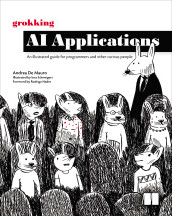
Grokking AI Applications
The Agent-to-Agent protocol is a standard for direct communication, task negotiation, and coordination between AI agents.
- How it is used
- Positions A2A as an orchestration protocol for making independent agents interoperable and collaborative.
- How deep it goes
- Defines direct communication, task negotiation, and coordination but stops short of implementation details or worked A2A workflows.
- What you can do after
- Evaluate A2A as a protocol choice when designing systems where agents must exchange messages, negotiate tasks, and collaborate.
Also covered in
- Architecting for AutonomyIn early access (MEAP)
- Designing AI AgentsIn early access (MEAP)
What to know first
- HTTPHTTP is an application-layer protocol that defines request-and-response communication for transferring resource representations and related metadata between networked systems.
- language modelA language model is a computational model that represents patterns in linguistic sequences to assign probabilities, predict, generate, or evaluate language.
- MCPThe Model Context Protocol is an open standard that defines how AI applications connect with external tools, data sources, and other contextual resources.
- toolA software tool is a capability or utility that enables a person or system to perform a defined task or operation.
Related concepts
- HTTPuses · HTTP is an application-layer protocol that defines request-and-response communication for transferring resource representations and related metadata between networked systems.
- MCPcontrasts with · The Model Context Protocol is an open standard that defines how AI applications connect with external tools, data sources, and other contextual resources.
- agent cardhas part · An agent card is a machine-readable document that describes an AI agent’s identity, capabilities, and endpoint for discovery and interaction.
- AI agentuses · An AI agent is a computational system that uses artificial intelligence to interpret information and select or perform actions toward goals while interacting with an environment.
- client-server architectureuses · Client-server architecture is a distributed computing pattern in which clients request services or resources from servers that provide them.
Questions about A2A
What is A2A?
A2A is an open interoperability protocol that enables software agents to discover, communicate, and coordinate with one another across systems.
Which Manning books explain A2A?
Build a Multi-Agent System (from Scratch), Context Engineering, Build an AI Agent (From Scratch) and Grokking AI Applications.
What should I know before learning A2A?
Manning books that teach A2A usually introduce HTTP, language model, MCP and tool first.
What is the difference between A2A and MCP?
A2A is an open interoperability protocol that enables software agents to discover, communicate, and coordinate with one another across systems. The Model Context Protocol is an open standard that defines how AI applications connect with external tools, data sources, and other contextual resources.
What are the parts of A2A?
A2A includes agent card.
What is A2A also called?
A2A is also called agent-to-agent protocol.
These guides are generated from the text of Manning books by Manning's knowledge graph and link to the sections they draw on. The full books are available on liveBook and at manning.com.