liveBook · Manning

Actor

As explained in Architecture Modernization: Socio-technical alignment of software, strategy, and structure

An actor is a person, group, or system whose actions can contribute to achieving a business goal.

An actor is a person, group, role, software system, or other entity whose actions participate in a domain process or story. Modeling actors makes responsibility and interaction visible across socio-technical workflows. section 8.4.1 section 8.5.1

Use actors to distinguish who or what performs an activity or initiates a process step:

  • Represent people or the roles they fulfill, such as a salesperson or legal team. section 8.4.1
  • Represent software systems or applications when they issue commands, produce events, or participate in interactions. section 8.4.1 section 8.5.1
  • Connect an actor to activities, work items, and other actors to show how a domain process unfolds. section 8.5.1

Approval and prescription workflows

In a contract-approval workflow, a salesperson requests approval, the contracts system raises an event, and software instructs the approvals system to request legal approval. In a prescription workflow, a customer places an order and uploads a prescription; a validation service contacts a doctor and confirms the result with the orders system. section 8.4.1 section 8.5.1
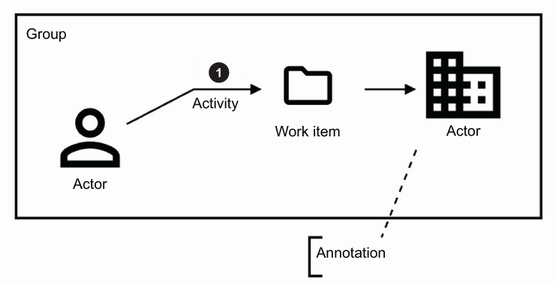
Figure 8.10 The five basic notation elements of the Domain Storytelling pictographic language

Compare the actor symbol with work items, activities, sequence numbers, annotations, and groups in the Domain Storytelling pictographic language. section 8.5.1


How Architecture Modernization: Socio-technical alignment of software, strategy, and structure covers it

How deep it goes
Defines actor notation and demonstrates interactions, but stops short of implementation details or formal behavioral specifications.
Examples
Uses salespeople, legal teams, customers, doctors, contracts systems, approval systems, and prescription services in workflow models.
What it assumes
Starts from people, software systems, and other entities playing roles, without requiring specialized implementation knowledge.
What you can do after
Apply it via EventStorming and Domain Storytelling to model responsibilities, interactions, and process sequences.
How it connects
Connects actors with roles, systems, commands, domain events, policies, work items, activities, sequence numbers, annotations, and groups.

Also explained in

Compare how 7 books explain actor →

Related concepts

This explainer was generated by Manning's knowledge graph from the text of Architecture Modernization: Socio-technical alignment of software, strategy, and structure. The section links point to the parts of the book it draws on.




