Adoption rate measures the proportion of eligible users or teams using a product, platform capability, or feature. Use it to test whether delivered value is reaching its intended audience before accepting ongoing sustainment costs. section 2.3.1 section 10.1.1
Track adoption as an operational signal rather than a vanity count:
- Measure teams and developers using the platform to assess relevance and usefulness. section 10.1.1
- Compare adoption with onboarding and migration timelines to uncover friction in platform usage. section 3.4.1
- Pair adoption with surveys, time savings, productivity, quality, and business metrics to connect usage with outcomes. section 2.3.1 section 10.1.1
Platform GUI decision
Suppose a GUI reduces a platform task to 10 minutes and could save 40 hours per quarter across each of 100 teams. Track adoption and penetration to verify whether the expected value is realized; if usage remains low, investigate the cause with follow-up surveys before continuing to sustain the feature. section 2.3.1
Figure 10.1 Quantifying the value across multiple levels, from building the capabilities to addressing the business outcomes
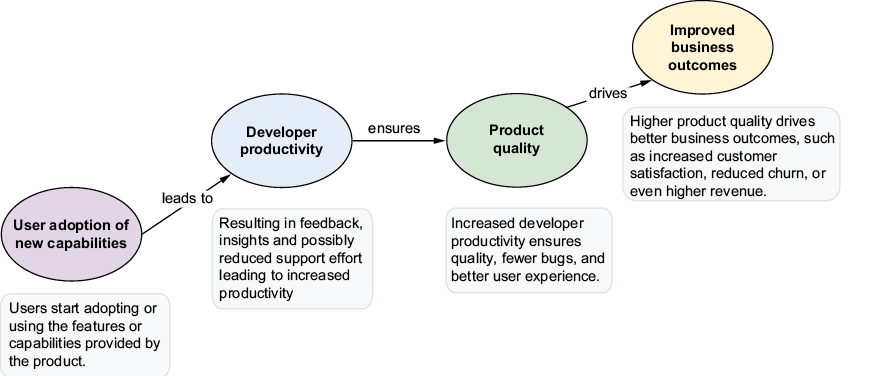
Use the value-quantification flow to connect platform adoption with productivity, quality, and business outcomes. section 10.1.1


