A proxy agent is an intermediary that stands between a user and another AI assistant or model. It receives the user’s request, reformulates or routes it for the task, and returns the resulting response. This arrangement helps users work with unfamiliar tasks, models, or tools without interacting with the underlying system directly. section 1.1
Proxy agents differ from other large-language-model interaction patterns:
- Direct interaction sends the user’s request straight to the language model without an intervening agent. section 1.1
- A proxy reformulates requests for another model or task, such as improving an image-generation prompt. section 1.1
- An assistant can call plugins or functions with user approval, while an autonomous agent plans and decides more independently. section 1.1
In a multi-agent system, the proxy communicates with the user and directs relevant assistant agents. It can review their work, evaluate results, provide feedback, and repeat the exchange until the task is satisfactory. This loop reduces the amount of human monitoring required, although it does not remove the need for human evaluation. section 4.1
Running a coding task with AutoGen
Configure an AutoGen UserProxyAgent and a ConversableAgent, then initiate a chat with a task such as writing Fizz Buzz in one line. The assistant proposes code; the proxy can execute it, inspect the output, install needed packages, and request another approach when the result fails. AutoGen Studio provides a chat interface for similar tasks, including generating a Google-search popularity plot. section 4.1.1 section 4.2.1
Figure 1.1 The differences between the LLM interactions from direct action compared to using proxy agents, agents, and autonomous agents
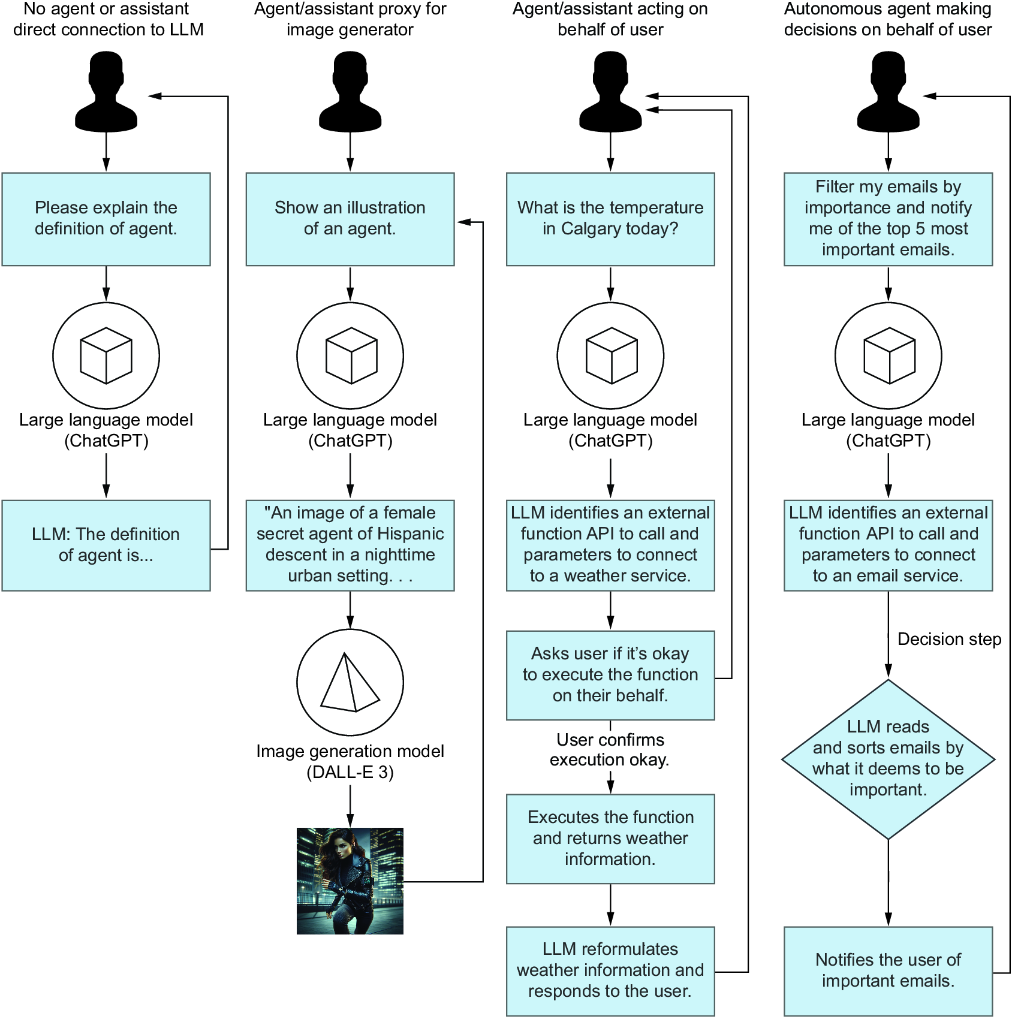
Compare direct interaction, proxy mediation, assistant tool calls, and autonomous-agent behavior in one visual overview. section 1.1
