Agent skill
An agent skill is a reusable package of instructions, capabilities, or resources that guides an AI agent in carrying out a task or workflow.
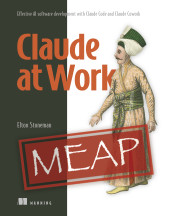
Claude at Work
A skill is a reusable set of instructions and supporting resources that guides Claude through a particular task or workflow.
- How it is used
- Encodes recurring Claude workflows as reusable instructions invoked automatically, explicitly, or on a schedule.
- How deep it goes
- Explains skill folders, staged loading, focused descriptions, creation, testing, scheduling, and distribution.
- Examples
- Demonstrates an ADR writer, a daily repository digest, and a platform-version update checker.
- What you can do after
- Build custom skills with Claude, test their outputs, and share or schedule recurring workflows.
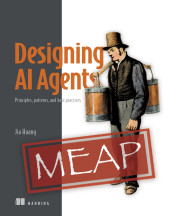
Designing AI Agents
A packaged agent capability that specifies how to perform a class of tasks, including relevant tools and workflow guidance.
- How it is used
- Turns repeatable procedures into versioned capabilities that can be selected for later tasks.
- How deep it goes
- Details applicability contracts, isolated and coexistence gates, bounded trials, layered routing, operating evidence, and reversible withdrawal.
- Examples
- Uses Voyager's Minecraft JavaScript library and Claude Code's SKILL.md packages to illustrate reusable capabilities.
- What you can do after
- Build a versioned skill admission and routing workflow with evidence-backed gates, hard filters, abstention, and rollback.
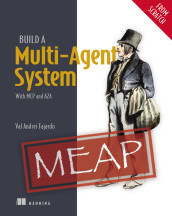
Build a Multi-Agent System (from Scratch)
A skill is a reusable workflow packaged for discovery, activation, and execution by an LLM agent.
- How it is used
- Provides reusable procedures that agents discover and follow instead of repeating multistep task instructions.
- How deep it goes
- Works through bundle structure, skill representation, discovery, activation, execution, and scope-based access control.
- Examples
- Uses a research-list workflow and exercises involving an MCP tool, explicit activation, and resource directories.
- What you can do after
- Builds skill support from scratch and applies it to reusable workflows with model-selected or user-explicit activation.
Read how Build a Multi-Agent System (from Scratch) explains agent skill →

The Art of Code
An AI skill is a reusable prompt or instruction set that guides an AI system through a specific task.
- How it is used
- Guides agents through reusable code-refactoring tasks, especially when existing behavior lets them focus on structure rather than invention.
- How deep it goes
- Details rule-based workflows with analysis, detection, refactoring, review, and reporting, including extraction criteria and boundary guardrails.
- Examples
- Uses narrative-code and clarity-of-intent skills alongside focused /simplify requests for memory efficiency or duplication.
- What you can do after
- Apply it via Claude Code’s /simplify command to seek focused improvements in existing code.
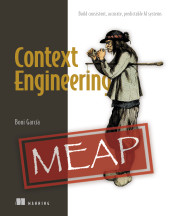
Context Engineering
A reusable set of instructions and resources that extends an agent's capabilities for a specialized workflow.
- How it is used
- Packages specialized procedures for on-demand use without expanding the global system prompt.
- How deep it goes
- Details skill structure, discovery, activation, supporting files, creation, and safety checks.
- Examples
- Uses commit-message generation, meeting-note formatting, and workspace cleanup to illustrate skills.
- What you can do after
- Build a custom skill from scratch and install it in a compatible agent's discovery directory.

Vibe Engineering
An Agent Skill is a directory-based format for packaging procedural instructions and optional supporting resources as loadable context for an AI agent.
- How it is used
- Packages organization-specific procedures as context that loads when relevant, rather than placing every instruction in always-loaded rules.
- How deep it goes
- Defines the directory, frontmatter, Markdown instructions, and optional resources, but specifies no schema or protocol.
- Examples
- Uses a pull-request review procedure with a migration check, checklist, finding categories, and a rule against approving.
- What you can do after
- Build it from scratch as a directory with a SKILL.md file and optional references, templates, examples, or scripts.
Also covered in
- Spec-Driven DevelopmentIn early access (MEAP)
What to know first
- AI agentAn AI agent is a computational system that uses artificial intelligence to interpret information and select or perform actions toward goals while interacting with an environment.
- MarkdownMarkdown is a lightweight markup language that uses readable plain-text syntax to represent structured and formatted documents.
- large language modelA large language model is a machine-learning model trained on extensive text data to process and generate natural language.
- YAMLYAML is a human-readable data serialization standard for representing structured data, commonly using indentation to express mappings and sequences.
Related concepts
- progressive disclosureuses · Progressive disclosure is a technique that presents information, capabilities, or details incrementally as they become relevant or needed.
- tooluses · A software tool is a capability or utility that enables a person or system to perform a defined task or operation.
- subagentused by · A subagent is an agent assigned by another agent to perform a delegated part of a larger task under its coordination or authority.
- experience replaycontrasts with · A pattern that uses past execution trajectories and relevant parts of their history to guide later work.
- LLM-powered agentused by · An LLM-powered agent is a software agent that uses a large language model to interpret inputs and generate responses or actions toward a goal.
Questions about agent skill
What is agent skill?
An agent skill is a reusable package of instructions, capabilities, or resources that guides an AI agent in carrying out a task or workflow.
Which Manning books explain agent skill?
Claude at Work, Designing AI Agents, Build a Multi-Agent System (from Scratch), The Art of Code, Context Engineering and Vibe Engineering.
What should I know before learning agent skill?
Manning books that teach agent skill usually introduce AI agent, Markdown, large language model and YAML first.
What is the difference between agent skill and experience replay?
An agent skill is a reusable package of instructions, capabilities, or resources that guides an AI agent in carrying out a task or workflow. A pattern that uses past execution trajectories and relevant parts of their history to guide later work.
What is agent skill part of?
Agent skill is part of adjustable layer. A set of reusable instructions and artifacts that can be changed to shape how an AI system works within a codebase.
These guides are generated from the text of Manning books by Manning's knowledge graph and link to the sections they draw on. The full books are available on liveBook and at manning.com.