An angel investor supplies personal capital to an early-stage company, usually seeking equity. Unlike a venture capital fund, an individual angel may invest a smaller check and collaborate with others to reach the company’s funding needs. section 12.2.2
A typical angel syndicate workflow includes:
- A lead investor identifies a start-up opportunity and negotiates the check size, funding timing, and equity terms. section 12.2.2
- The lead connects with other angels through a network and raises capital jointly. section 12.2.2
- The investors establish a special purpose vehicle, typically an LLC, so one entity appears on the start-up’s cap table. section 12.2.2
- The structure expands access to later-stage opportunities without requiring each participant to match a large venture-fund ticket. section 12.2.2
A small syndicate investment
An angel may commit $10,000, $50,000, or $100,000, while the start-up needs more capital. The angel negotiates the terms, recruits other angels, and represents them through an SPV. Networks can also combine financial goals with community ties, such as diaspora investors backing founders in their country of origin. section 12.2.2
Figure 12.2 A lead investor’s job is to represent all investors when forming an SVP that will be registered on a start-up’s cap table.
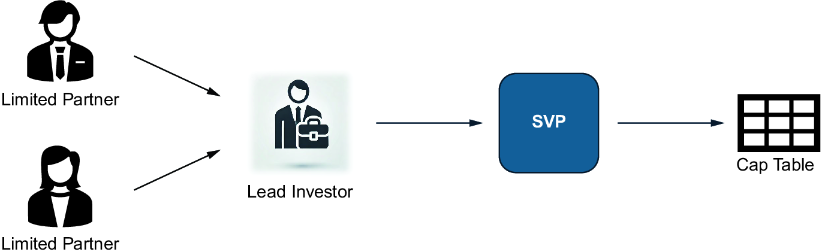
Use the figure to trace how a lead investor represents participating angels when forming the SPV registered on the start-up’s cap table. section 12.2.2

