An autonomous digital twin closes the loop between a physical system and its digital representation. It uses information, predictions, or simulations to take real-world action or recommend a decision. Action can mean opening a pressure-release valve when tank pressure is predicted to become unsafe, or sending a notification to a person who can respond. section 1.3.5 section 1.7
Autonomy is not the same as fixed-rule automation. A conventional control system responds to sensor readings according to preprogrammed logic. An autonomous twin can instead weigh conflicting objectives, anticipate future states, and adapt its proposed control strategy. It need not use agentic AI: reinforcement learning, model predictive control, and multi-objective optimization are also possible approaches. The test is whether it independently evaluates tradeoffs and acts or recommends action beyond fixed rules. section 1.3.5
Home temperature
A basic thermostat turns heating or cooling on to reach a configured temperature. A smart thermostat offers a more concrete view of adaptive action: presence sensing through household phones can enable Eco mode when occupants are away. The useful question is not whether the device is branded “smart,” but what information it uses to decide when to change its behavior. section 1.3.5
Figure 1.12 The interface to a Nest smart thermostat showing how it takes action based on your physical location. Eco mode is enabled by presence sensing through the location of mobile phones in the household. Image © Thomas Smailus, Ph.D., P.E. Reproduced with permission.
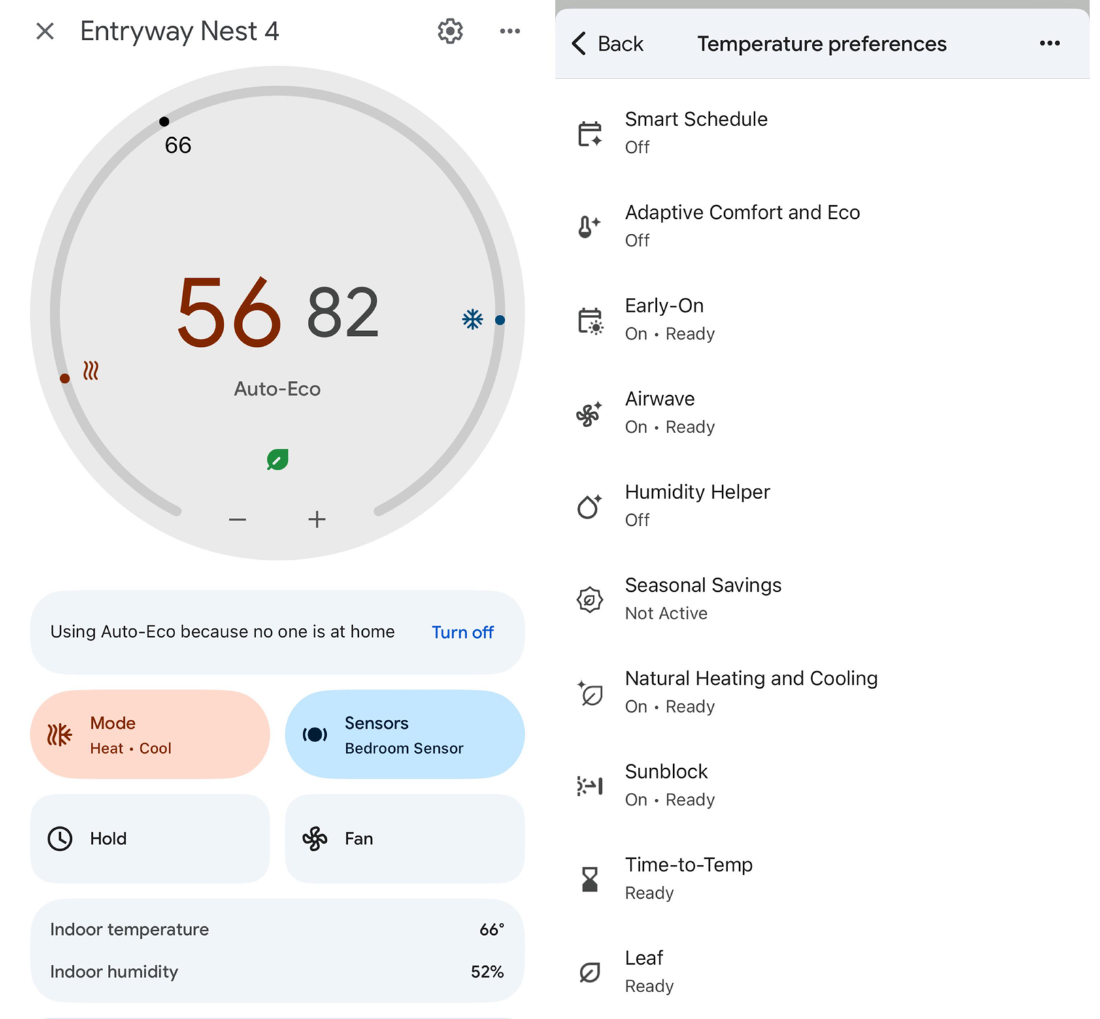
The thermostat interface shows Eco mode enabled through presence sensing based on household phone locations—a visible link between a changing real-world condition and an action. section 1.3.5
Start with the intended outcome before choosing an autonomy technique. A digital representation may progress from static description to live updates, prediction, and simulation; closing the loop adds decisions that affect the physical world. Decide whether those decisions should be recommendations, electronic actions, or direct actuation, and assess the skills and build-or-buy approach needed to deliver them. section 1.3.5 section 1.7
