Biometric authentication identifies people through distinctive physiological characteristics, such as fingerprints, facial recognition, or retinal scans. It is one option among authentication mechanisms that also include passwords and passwordless technologies. section 7.1.1
A biometric system must balance security and usability. False rejections can frustrate legitimate users, while false acceptances can create security vulnerabilities. Reviewing both measures helps teams assess system performance. section 8.5.5
Improving access at DataSecure
DataSecure, a financial services company, analyzed its biometric system’s error patterns and recalibrated sensitivity thresholds. It also introduced machine learning algorithms and monitored results. Monthly false rejections fell from 150 to 30, and the false rejection rate dropped from 3% to 0.5%; false acceptance rates also decreased. section 8.5.5
Figure 8.5 The left side shows DataSecure, Inc. FRR, FAR, and EES dashboard before implementing improvements. The right side shows improvements after reducing both false rejection and false acceptance rates.
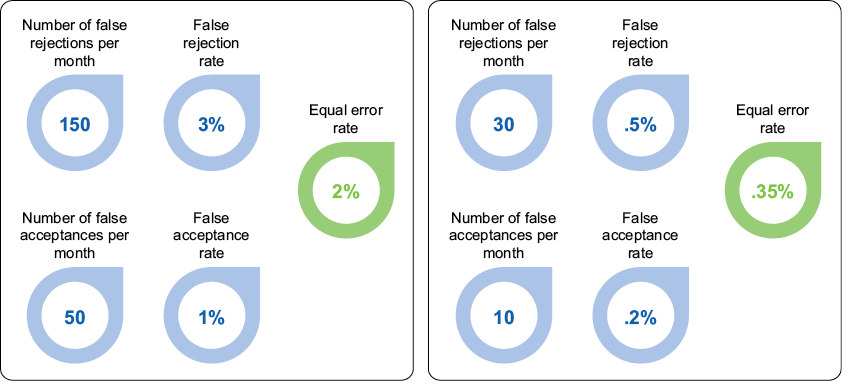
Compare the dashboard before and after the system changes to see the reported improvements in false rejection and false acceptance rates. section 8.5.5


