Business logic is the domain-specific set of rules governing approved system behavior. Interfaces expose those rules through procedural doors—endpoints, commands, or public functions—while schemas describe only what data can exist. section 8.1
A booking rule inside an endpoint
A rule such as “cancel a booking and refund the deposit only when cancellation occurs more than 24 hours before the start” belongs in the handler. The handler combines reads, writes, checks, and external calls; the schema alone cannot express the policy. section 8.1
Figure 8.2 An interface as a row of doors: each door is an address, each key is a method or signature, and the procedure inside is the business logic.
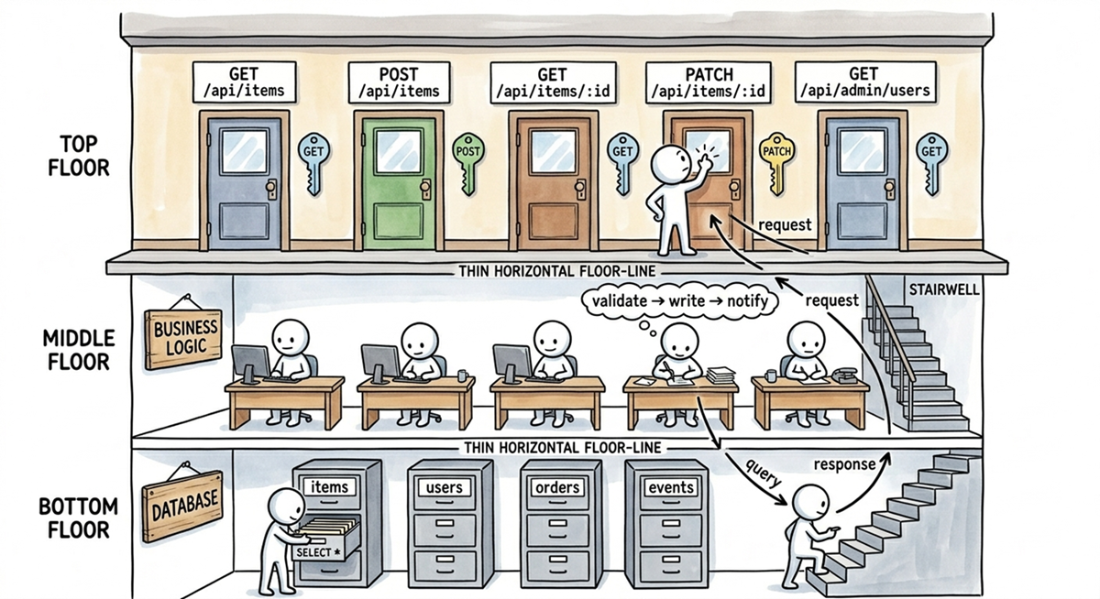
Use the row-of-doors model to locate business logic: identify the address, method or signature, and procedure behind each system entry point. section 8.1
Read unfamiliar business logic by:
- Starting at an endpoint, CLI command, or public function rather than a buried helper. section 8.1
- Tracing the downstream service methods, database queries, and external API calls with their triggering context. section 8.1














