The C4 model provides a practical way to visualize software architecture at different levels of detail. Start with who uses a system and what it interacts with, then zoom into the applications and data services that implement it. section 1.4.1
Use the model to move from stakeholder-friendly context to developer-oriented structure:
- A system context diagram shows users, the system, and other systems it interacts with without exposing internal technologies. section 1.4.1
- A container diagram zooms into the system, showing high-level applications or data services, their responsibilities, and their interactions. section 1.4.1
- In C4 terminology, a container means an application or data service; it does not mean a Docker or Podman container. section 1.4.1
MinSalus architecture
A patient uses MinSalus to book appointments and receive schedule updates. The context diagram presents the patient and MinSalus as the main abstractions. The container diagram then identifies elements such as the Patient Portal, session store, and Appointment Service, clarifying their responsibilities and relationships. section 1.4.1
Figure 1.6 The system context diagram for MinSalus, following the C4 model.
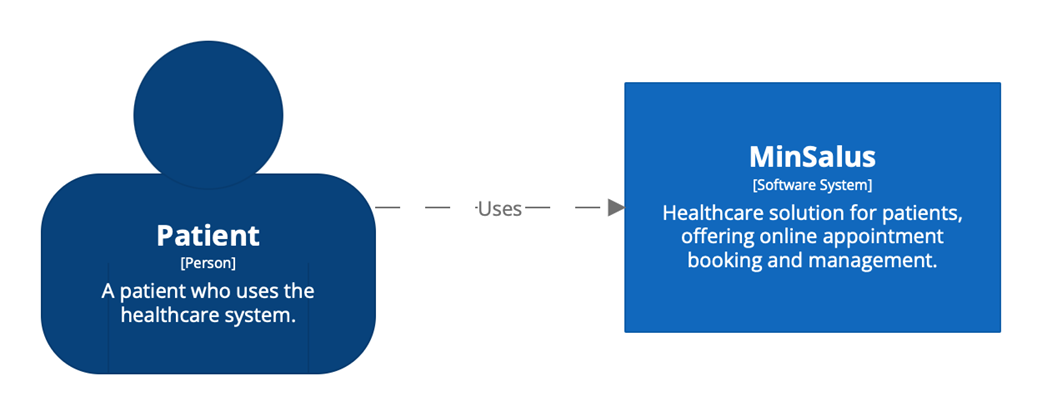
Inspect the system context diagram to see how users, the system, and external interactions are represented for a broad audience. section 1.4.1
Figure 1.7 The container diagram for MinSalus, following the C4 model.
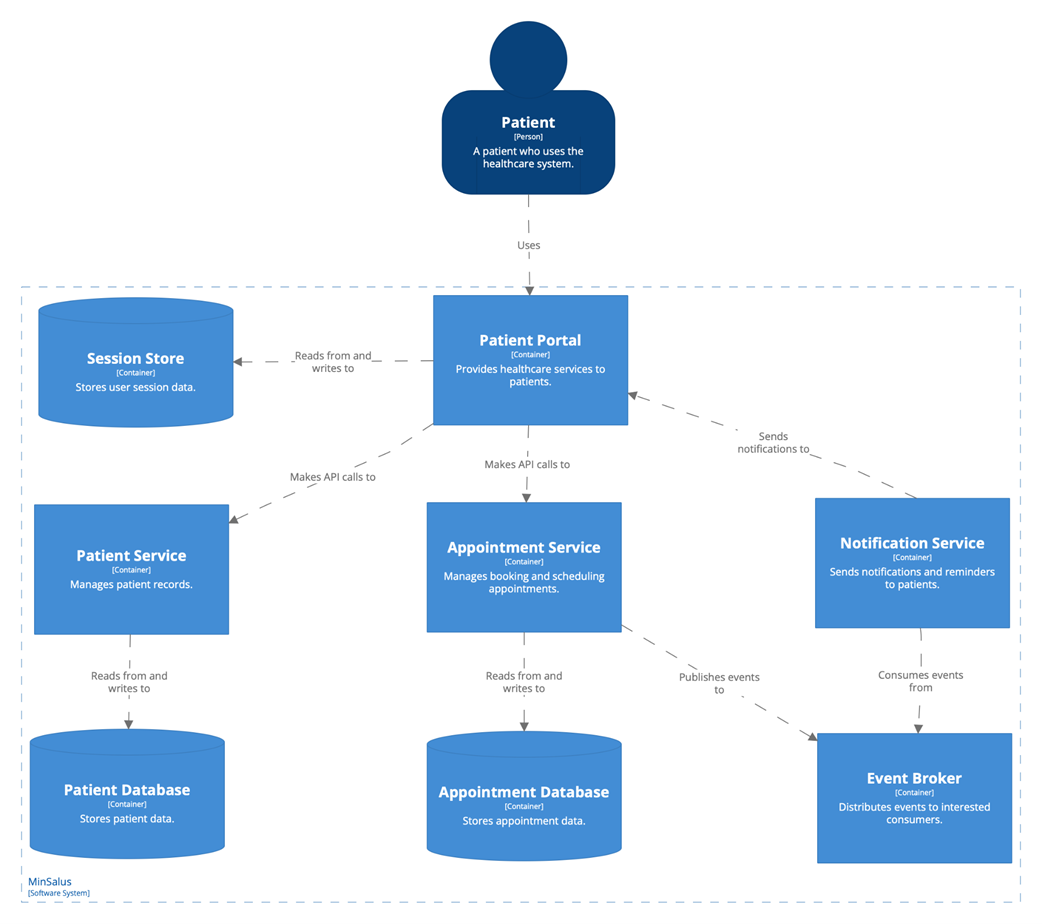
Inspect the container diagram to see how internal applications and data services are decomposed for development work. section 1.4.1