Cause analysis systematically examines an observed effect to identify underlying causes, explain cause-and-effect relationships, and prevent recurrence rather than applying a temporary fix. section 2.6
Apply the technique by:
- Start with a defined problem, its manifestations, and a desired improvement goal. section 2.2
- Ask “Why?” or “What caused this problem?” repeatedly; five iterations are a guide, not a rule, and causes may branch. section 2.6
- Formulate a predictive theory about how addressing the identified causes should improve the system. section 2.12.1
- Review the reasoning with colleagues and stakeholders to validate it and expose alternative causes. section 2.6
API design-change delays
An analysis of Acme’s API design change lead-time problem identified two root causes: the design collaboration tool lacked version control, and the central API gateway team focused on routing rather than automated review and end-to-end delivery practices. section 2.6
Use a systems-thinking view: consider workflow relationships, historical context, organizational priorities, stakeholder feedback, and proposed countermeasures instead of isolated components. Test the theory through a small-scale change, study the results, and revise the theory when evidence contradicts it. section 2.12.1 section 2.12.3
Figure 2.9 Root-cause analysis of Acme’s API design change LT problem
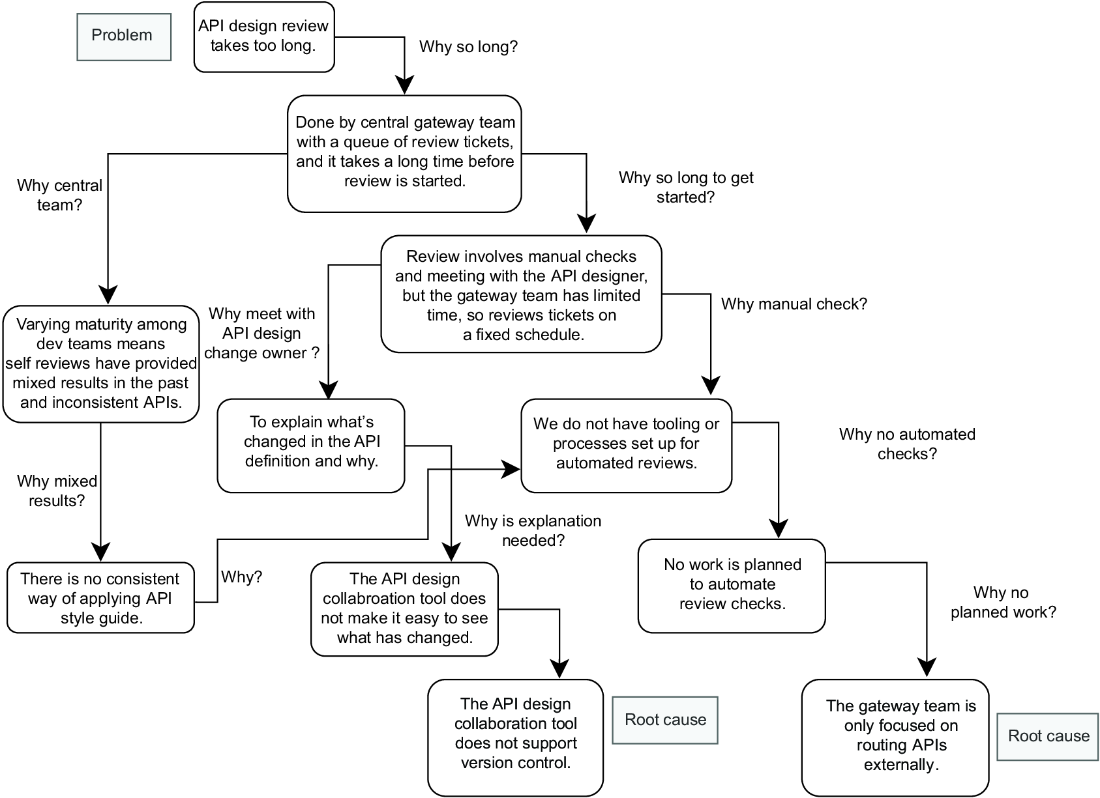
Inspect the root-cause tree for the API design-change delay example. section 2.6


