Cause analysis identifies why an adverse event occurred so the underlying problem can be corrected, rather than only its symptoms. In cybersecurity, it follows the assessment of unusual activity: analysts first determine whether an event is a benign anomaly or a genuine threat, then investigate how it happened and where controls failed. section 8.6 section 9.5
A practical investigation moves from evidence to action:
- Collect relevant incident information and examine it for patterns and possible causes. section 9.5
- Ask why the problem occurred, repeatedly if needed. The Five Whys helps move past symptoms toward a primary factor, such as a vulnerability, misconfiguration, or attacker exploit. section 9.5
- Implement corrective actions that address the identified weakness and reduce the likelihood of recurrence. section 9.5
Tracing a data breach
At a financial institution, investigators traced an unusual data transfer through a timeline of phishing, subsequent logins, and exfiltration. The phishing email was the entry point; missing multifactor authentication for remote access allowed stolen credentials to be used. The institution added multifactor authentication, improved email filtering and network monitoring, and trained staff to recognize phishing. Each action addressed a finding from the investigation rather than the data transfer alone. section 9.5.1
Track whether investigations become faster and whether fixes last. In one incident-analysis exercise, average root cause analysis time fell from 12 to 4 hours, while the incident re-occurrence rate fell from 20% to 5% after process improvements. A separate adverse-event exercise reported an 80% root cause resolution rate after strengthening investigative tools and procedures. These measures give leaders a way to judge progress, but the decision remains whether identified weaknesses are being addressed. section 9.5.3 section 8.6.2
Figure 9.4 The left side shows SecureTech’s incident analysis dashboard before improving the incident management process. The right side shows the dashboard after improvements.
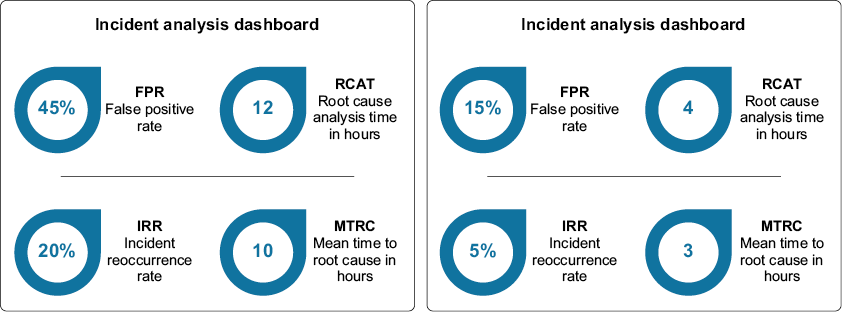
Compare the before-and-after incident dashboard, particularly analysis time and incident re-occurrence, to see whether investigations and corrective actions improved. section 9.5.3


