The California Consumer Privacy Act (CCPA) is a California privacy law that took effect in January 2020 and grants California residents rights concerning businesses’ collection, use, sharing, and sale of personal information. section 8.2.1
The law primarily affects qualifying for-profit businesses, including those meeting revenue, consumer-data volume, or data-sale thresholds. Analysts may share compliance responsibility with IT, security, and legal teams. section 8.2.1
Key distinctions and implications include:
- Limits coverage to people who are legal residents of California, unlike the GDPR’s broader treatment of people in the European Union. section 8.2.1
- Targets qualifying for-profit businesses with at least $25 million in annual gross revenue, substantial consumer-data activity, or significant revenue from selling data. section 8.2.1
- Requires attention to requests involving modification, deletion, or restrictions on personal-data use, while interpretation and enforcement continue to evolve. section 8.2.1
Figure 8.3 Many types of sensitive information are governed by sector-specific laws, both in the US, as in the examples shown here, and around the world.
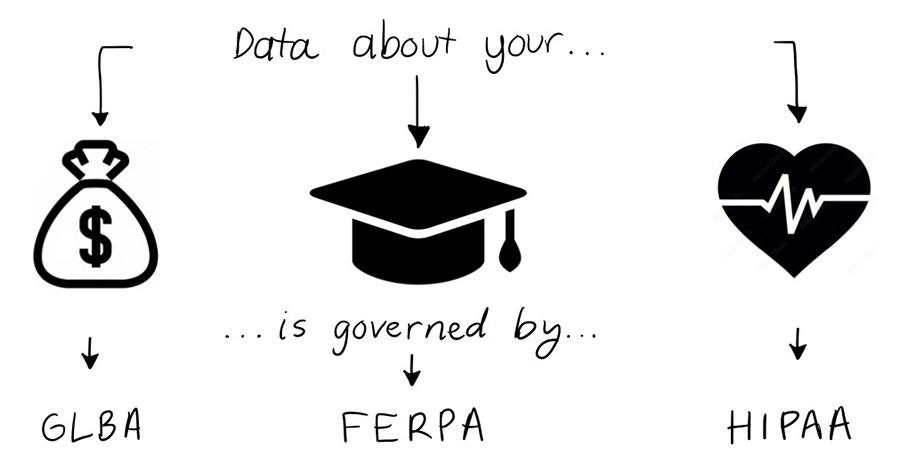
Use the figure to place the CCPA alongside sector-specific data-protection laws governing sensitive information. section 8.2.1


