liveBook · Manning

Component

As explained in Grokking Software Architecture

A component is a modular software unit that encapsulates related functionality and interacts with other units through defined boundaries.

A component is a self-contained, modular unit that groups related functionality and connects to other units through an agreed interface. Like LEGO bricks, components can be combined in different ways to meet specific needs. section 3.6.2

Well-designed components make reuse practical:

  • Keep related functionality together, so each component is cohesive. section 3.7
  • Connect components through standard interfaces, keeping them loosely coupled. section 3.6.2
  • Assemble reusable components in different combinations instead of copying and modifying whole systems. section 3.6.2

Scorecards: reuse instead of copy

A system with 35 duplicated scorecards made changes costly. Reusable components let a new industry scorecard reuse pieces such as the Header and CashFlowAnalysisComponent, leaving only its unique requirements to build. section 3.6.2

Figure 3.11 Composability allows components to be assembled in various combinations.
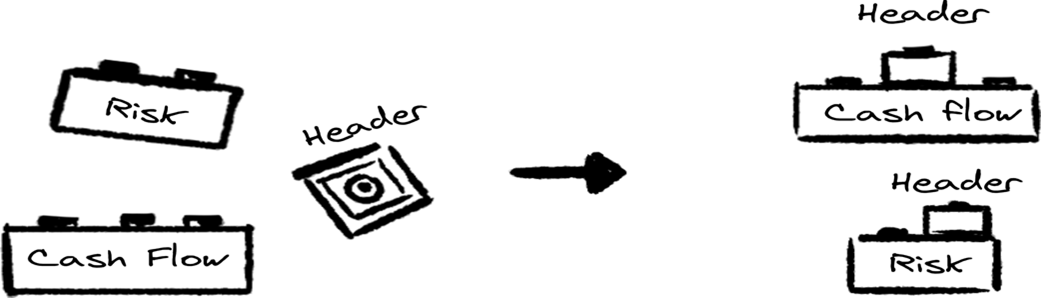
See how components can be assembled in different combinations. section 3.6.2


How Grokking Software Architecture covers it

How deep it goes
Defines composability and explains component-level design through scorecards, cohesion, coupling, and architecture across scales.
Examples
Uses LEGO bricks, duplicated industry scorecards, and reusable Header and CashFlowAnalysisComponent blocks as examples.
What you can do after
Apply component composition to assemble scorecards from reusable units, building only the requirements unique to each one.
How it connects
Connects components to composability, high cohesion, loose coupling, Separation of Concerns, and the Single Responsibility Principle.

Also explained in

Compare how 14 books explain component →

Related concepts

This explainer was generated by Manning's knowledge graph from the text of Grokking Software Architecture. The section links point to the parts of the book it draws on.











