A worker node is the execution layer of a Kubernetes cluster. It reports resources to the control plane, runs scheduled container workloads, and maintains network rules for Pod connectivity. section 3.2 section 3.2.1
A worker node combines three cooperating components:
- The kubelet runs Pods, retrieves workload specifications from the API server, and reports node status to the scheduler. section 3.2.3
- Kube-proxy creates and deletes network rules that provide connectivity to Pods, using a host packet filter when available. section 3.2.3
- The container runtime runs the actual containers; supported alternatives include CRI-O and containerd through the Container Runtime Interface. section 3.2.3
The scheduler selects a node after a workload is submitted, and the kubelet creates the Pod from specifications retrieved through the API server. Selectors, taints, tolerations, and affinity rules constrain placement. section 3.2.3 section 3.5
Node networking can use kube-proxy or, with a suitable CNI such as Cilium, a kube-proxyless mode using eBPF to provide equivalent functionality. section 3.2.3
Inspecting nodes in GKE
In the GCP console, open Kubernetes Engine, select a cluster, open its details, and choose Nodes to view node information. GKE on-prem additionally exposes control-plane components for troubleshooting and configuration work. section 3.2
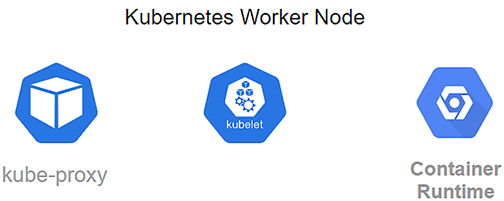
Use the worker-node component diagram to relate the kubelet, kube-proxy, and container runtime. section 3.2.1





