Concurrency organizes independent tasks so they can make progress at the same time, often by switching between them. Parallelism means executing separate tasks simultaneously on multiple physical resources. Structuring work concurrently creates opportunities for parallel execution. section 1.3.1
For GPU work, the host organizes a problem into independent tiles; the device can compute many tiles at once. The work is concurrent in its structure and data-parallel in its execution. section 1.5
One cashier, several orders
A cashier switches between brewing one customer’s espresso and taking another customer’s payment. The orders progress concurrently, but not simultaneously; multiple cashiers serving different customers at once would be parallelism. section 1.3.1
Figure 1.4 In concurrency, a single worker (thread or core) switches between multiple tasks, giving the illusion of simultaneous progress. In parallelism, multiple workers execute separate tasks at the same instant.
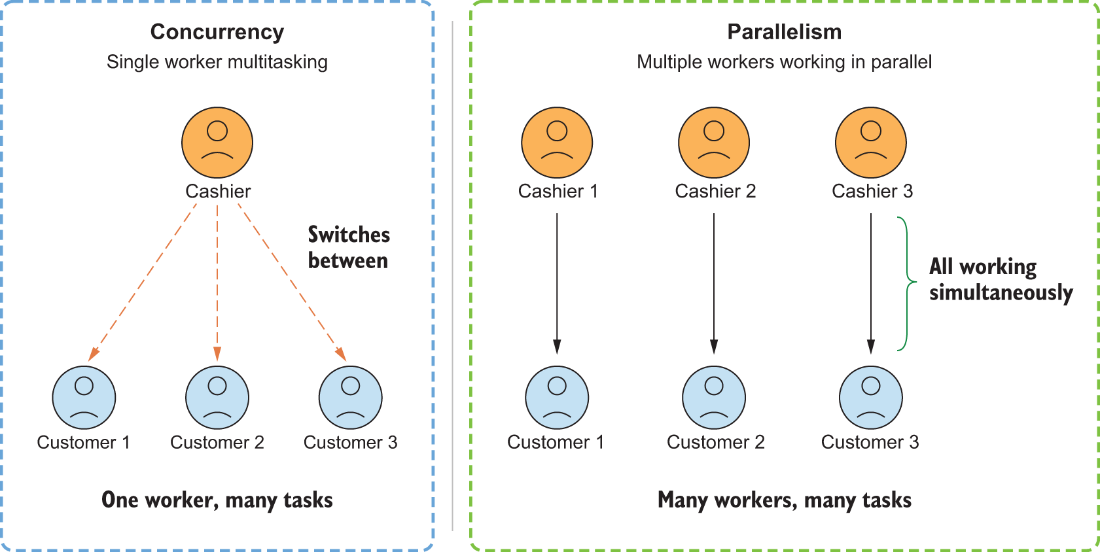
Use the figure to compare one worker switching among tasks with multiple workers executing tasks simultaneously. section 1.3.1