Concurrency is the overlapping execution of operations or transactions. It does not require one operation to finish before another begins, and it does not necessarily mean parallel execution. section 2.2.1
Use the happened-before relationship to reason about order. Events on one component follow their local order; sending a message happens before receiving it. Events are concurrent when neither happened before the other. section 2.2.1
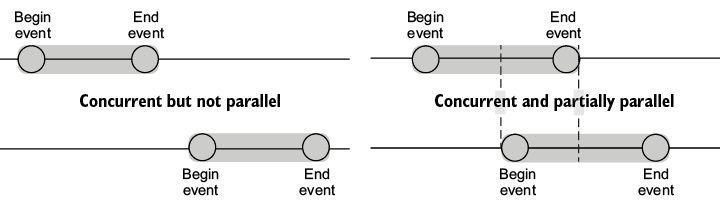
A compact comparison separates concurrency between events from parallelism between operations. section 2.2.1
A concurrent funds transfer
A transfer debits one account and credits another. If execution fails between those writes, the transfer is incomplete. Transactions hide this failure and preserve completeness; under concurrency, they also prevent concurrent effects from introducing inconsistent results. section 5.2.2 section 5.3.1
Correct concurrent execution is serializable: the combined effect must equal executing one transaction before the other, in either order. Temporary inconsistency during execution may be hidden while the transaction moves between consistent states. section 5.3.1






















