Context engineering
Context engineering is the deliberate selection, organization, and management of information supplied to an AI system to support effective task performance.

Vibe Engineering
Context engineering is the discipline of designing, selecting, structuring, and maintaining the information supplied to an AI system so it can perform tasks effectively.
- How it is used
- Supplies AI coding agents with the project information and constraints needed to perform tasks.
- How deep it goes
- Explains context failure modes and operational practices for labeling, retrieving, compressing, and maintaining information, including automation tradeoffs.
- Examples
- Compares labeled and unlabeled authentication snippets and audits bloated agent rules files.
- What you can do after
- Apply it by selecting and labeling relevant context, auditing shared instructions, and maintaining project knowledge for agents.
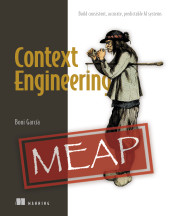
Context Engineering
Context engineering is the discipline of selecting, organizing, and updating information supplied to a model in an appropriate form and at an appropriate time.
- How it is used
- Shapes the information supplied to each LLM call across workflows and agent systems.
- How deep it goes
- Develops context-source selection and architecture, with worked applications and mathematical formulations for optimization and model conditioning.
- Examples
- Illustrates travel planning with live evidence and builds a persistent knowledge base from research papers.
- What you can do after
- Apply context engineering with Codex and Context7 to combine repository context, current documentation, and test feedback.

Designing AI Systems
Context engineering is the deliberate assembly of the information supplied to a model call within constraints such as token capacity and attention behavior.
- How it is used
- Assembles request-specific context for long-running assistants under token and attention constraints.
- How deep it goes
- Develops budgeting, ordering, history strategies, and request-time assembly through a platform implementation.
- Examples
- Illustrates a patient allergy in a long conversation and a knowledge assistant’s document-versus-history budget.
- What you can do after
- Apply it via the platform SDK to select session strategies and assemble prioritized context for a model call.
Read how Designing AI Systems explains context engineering →
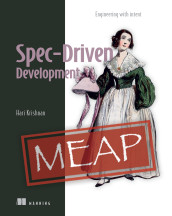
Spec-Driven Development
Context engineering is the deliberate organization of relevant information so that a participant or system can understand and act on it effectively.
- How it is used
- Organizes intent and task-relevant information so coding agents can implement aligned behavior across iterations.
- How deep it goes
- Contrasts tactical prompts with structured specifications and explains context-window compaction; stops short of a detailed specification template.
- Examples
- Uses a prompted URL shortener and password-reset acceptance scenarios and tests to contrast inferred behavior with verifiable intent.
- What you can do after
- Practice/perform context engineering by preserving important decisions in structured artifacts and supplying relevant intent for later agent work.
Read how Spec-Driven Development explains context engineering →

Build an AI Agent (From Scratch)
The discipline of designing which information is provided to a language model, when it is provided, and how it is represented for task completion.
- How it is used
- Guides what an agent supplies to the model as tasks, tool results, and conversation history evolve.
- How deep it goes
- Defines five strategies and traces request construction, with further implementation distributed across agent components.
- Examples
- Uses a curated LLM request and workspace-based skill disclosure to illustrate context selection.
- What you can do after
- Evaluate and understand which information to include, omit, or format for a model call.
Read how Build an AI Agent (From Scratch) explains context engineering →
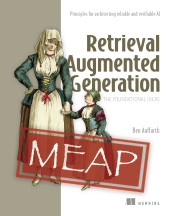
Retrieval Augmented Generation, The Foundational Ideas
The deliberate selection, organization, and presentation of information in a model's input context.
- How it is used
- Designs LLM inputs by selecting, structuring, and optimizing relevant information, especially through retrieval-augmented generation.
- How deep it goes
- Explains prompt construction, information density, retrieval, ranking, and grounding, but does not provide implementation code.
- Examples
- Uses large knowledge bases, semantic retrieval, extended prompts, lost-in-the-middle effects, and supporting passages as examples.
- What you can do after
- Build RAG pipelines that retrieve focused context, structure prompts, and expose passages for answer verification.
Read how Retrieval Augmented Generation, The Foundational Ideas explains context engineering →

Introduction to Generative AI, Second Edition
Context engineering is the systematic assembly and structuring of prompts, instructions, history, memory, retrieved information, tools, and output constraints needed for a model to complete a task.
- How it is used
- Frames reliable AI output as a system-level task of assembling and structuring all relevant model inputs.
- How deep it goes
- Defines the expanded scope and design decisions, but stops short of implementation procedures or technical internals.
- Examples
- Uses system instructions, queries, histories, memories, retrieved documents, tool definitions, and formatting constraints as examples.
- What you can do after
- Apply it by selecting, excluding, structuring, and timing the information supplied to a language model.
Read how Introduction to Generative AI, Second Edition explains context engineering →
Also covered in
- LLM Evaluation and Alignment, The Foundational IdeasIn early access (MEAP)
- Transformers in Action
What to know first
- context windowA context window is a bounded span of sequence elements or contextual information that a model or processing operation can consider together.
- promptA prompt is text or other input supplied to an AI model to provide instructions, context, or other information that guides its response or generated output.
- language modelA language model is a computational model that represents patterns in linguistic sequences to assign probabilities, predict, generate, or evaluate language.
- prompt engineeringPrompt engineering is the deliberate design and refinement of inputs, instructions, and context to guide an AI model’s behavior or outputs.
Related concepts
- prompt engineeringcontrasts with · Prompt engineering is the deliberate design and refinement of inputs, instructions, and context to guide an AI model’s behavior or outputs.
- agent harnesspart of · An agent harness is the surrounding software, configuration, instructions, and execution environment that provides capabilities and manages an AI agent’s operation and constraints.
- context windowuses · A context window is a bounded span of sequence elements or contextual information that a model or processing operation can consider together.
- AI agentused by · An AI agent is a computational system that uses artificial intelligence to interpret information and select or perform actions toward goals while interacting with an environment.
- AI frameworkused by · An AI framework is a software framework that provides reusable abstractions and components for developing artificial intelligence models or applications.
- assembly functionuses · An assembly function combines instructions, retrieved passages, tool schemas, memory, state, and a request into a model’s context.
Questions about context engineering
What is context engineering?
Context engineering is the deliberate selection, organization, and management of information supplied to an AI system to support effective task performance.
Which Manning books explain context engineering?
Vibe Engineering, Context Engineering, Designing AI Systems, Spec-Driven Development, Build an AI Agent (From Scratch), Retrieval Augmented Generation, The Foundational Ideas and Introduction to Generative AI, Second Edition.
What should I know before learning context engineering?
Manning books that teach context engineering usually introduce context window, prompt, language model and prompt engineering first.
What is the difference between context engineering and prompt engineering?
Context engineering is the deliberate selection, organization, and management of information supplied to an AI system to support effective task performance. Prompt engineering is the deliberate design and refinement of inputs, instructions, and context to guide an AI model’s behavior or outputs.
What is context engineering part of?
Context engineering is part of agent harness. An agent harness is the surrounding software, configuration, instructions, and execution environment that provides capabilities and manages an AI agent’s operation and constraints.
These guides are generated from the text of Manning books by Manning's knowledge graph and link to the sections they draw on. The full books are available on liveBook and at manning.com.