liveBook · Manning

Continuous data

As explained in Data Without Labels

Continuous data can take any value within a range, including fractional or decimal values.

Continuous data represents measurable quantities that can take any value within a range, including fractional or decimal values. It is a subtype of quantitative data and supports mathematical and statistical operations. section 1.2.2

Distinguish continuous data from discrete data by asking whether fractional values are meaningful:

  • Height is continuous because it can take decimal values. section 1.2.2
  • A product price is continuous when values need not be integers. section 1.2.2
  • Passenger counts and city populations are discrete because they are represented as integers. section 1.2.2
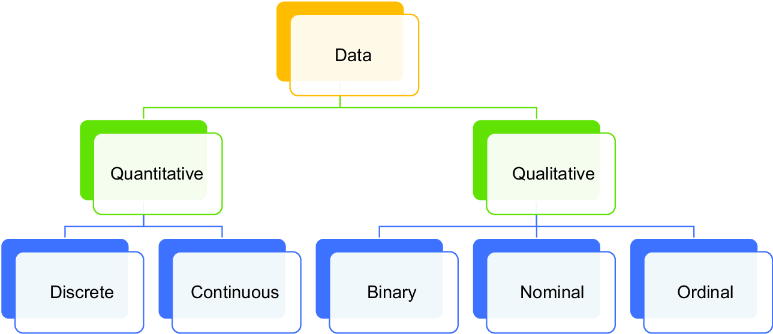
Figure 1.2 The divisions and subdivisions of data
figure

Use the data taxonomy to locate continuous data under quantitative data and distinguish it from discrete data. section 1.2.2


How Data Without Labels covers it

How deep it goes
Defines continuous data and contrasts it with discrete data, stopping short of modeling procedures or implementation workflows.
Examples
Uses height and product price as continuous examples, contrasting passenger counts and city populations as discrete data.
What it assumes
Assumes no specialized background and teaches the distinction between measured quantities and integer counts directly.
What you can do after
Evaluate whether a measured variable is continuous or discrete based on whether fractional values are meaningful.
How it connects
Connects continuous data to quantitative data, discrete data, structured data, and mathematical and statistical operations.

Also explained in

Compare how 5 books explain continuous data →

Related concepts

This explainer was generated by Manning's knowledge graph from the text of Data Without Labels. The section links point to the parts of the book it draws on.


