Client code is the application or service code that makes requests to an API through its published interface. The people building that integration are API consumers. For an API product, a usable interface is only part of the package: documentation and support help consumers integrate and keep using it. section 1.4 section 1.3
In a microservices setup, an API gateway can expose the product interface to clients and route requests to backend services. An OpenAPI definition describes the operations and resources available at that interface; a developer portal publishes the reference and guides clients need to use it. section 1.4
The definition supports several parts of a client integration workflow:
- Generate client code from the API definition rather than starting every integration by hand. section 1.6
- Mock the OpenAPI definition so integration code and acceptance tests can be developed in parallel with implementation. section 1.6
- Check provider responses against the published schema. A passing schema test establishes schema conformance, not that response values are correct or that the client behaves correctly. section 7.1
A response the client consumes
Suppose a client requests a product. The published response schema requires an `id` formatted as a UUID and permits a `name` string of 1–50 characters. A schema test can fail if the provider returns a response that violates those constraints; it does not test what the client does with a valid response. section 7.1
Figure 1.3 In a microservices architecture, API gateways define API products and route requests to backend microservices that implement the business capabilities.
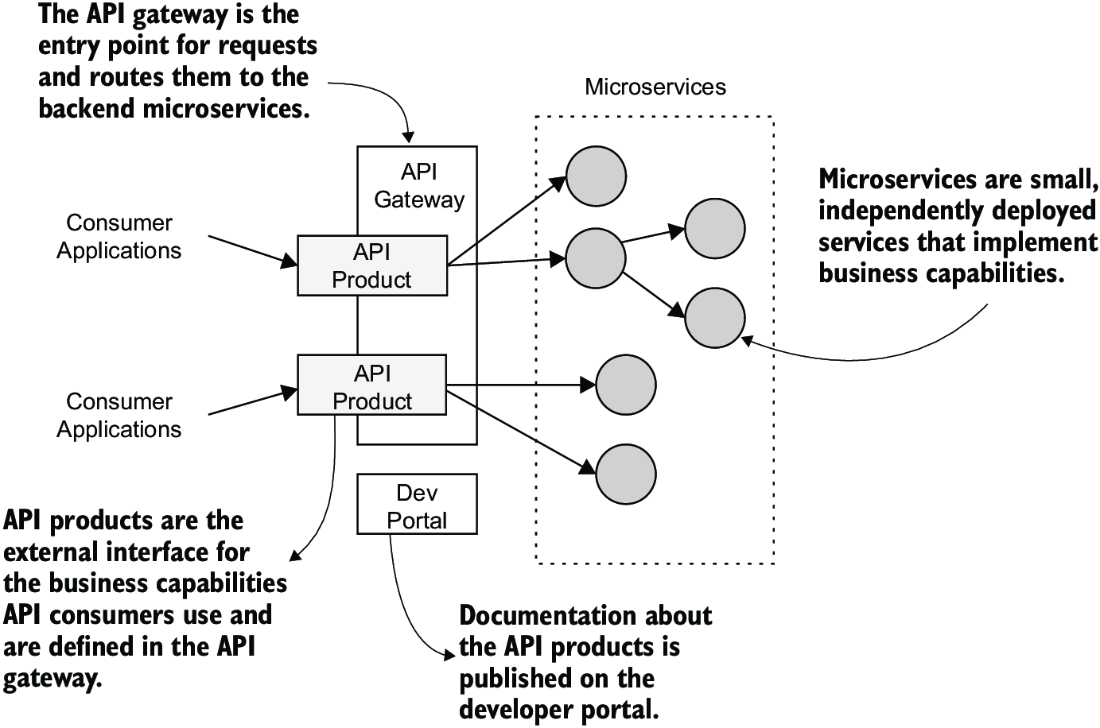
The gateway diagram locates the client-facing API product interface between API consumers and backend microservices. section 1.4














