A client is a person or group that receives or evaluates the value provided by a product or service. For an engineering platform, clients are the people who actually use it, especially software developers and engineers who depend on it frequently. Their usage, needs, and outcomes should guide platform priorities. section 2.1.2
Separate clients from stakeholders. Stakeholders influence requirements through leadership, governance, or other organizational roles, but they are not necessarily users. Their legitimate concerns can be addressed without allowing them to control implementation at the expense of client experience. section 2.1.2 section 2.4
Use client focus to make platform decisions:
- Start with internal clients who use the platform most often and whose work most directly affects organizational success. section 2.1.2
- Prioritize features by who will use them, how frequently they will be used, and the value they can provide. section 2.1.2
- Test early experiences with alpha users before investing in complex implementations, using feedback to determine the next steps. section 2.4
An engineering platform with different users
Developers and engineers may use almost every platform feature daily, while other groups use only a few capabilities occasionally. Build first for the frequent users, then use observed value and feedback to expand the platform without letting influential nonusers dictate the implementation. section 2.1.2 section 2.4
Figure 2.3 A stakeholder map visualizes a stakeholder’s influence over the backlog against their alignment to platform objectives. High-influence stakeholders must be highly aligned for a platform to succeed.
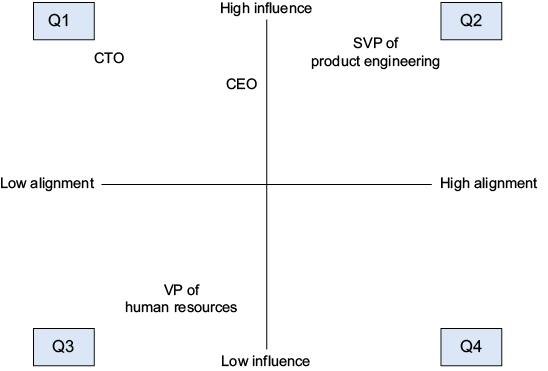
Map stakeholder influence against alignment with platform objectives so high-influence stakeholders can be aligned without confusing influence with client status. section 2.1.2














