Data-driven approach
A data-driven approach bases decisions, conclusions, or system behavior substantially on collected or observed data rather than primarily on intuition or assumptions.
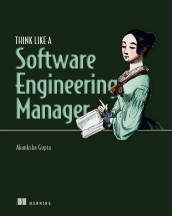
Think Like a Software Engineering Manager
A data-driven discussion is a conversation whose evaluation and conclusions are grounded in relevant evidence and data.
- How it is used
- Grounds engineering-management discussions about trade-offs, conflict, performance, staffing, and change in relevant evidence.
- How deep it goes
- Provides practical discussion steps and categories of evidence, but no formal statistical method or prescribed decision formula.
- Examples
- Uses hiring capacity, documented employee feedback, team productivity changes, and technical-debt metrics as concrete evidence.
- What you can do after
- Practice/perform evidence-grounded conversations that identify trade-offs, invite input, choose actions, and assess results.
Read how Think Like a Software Engineering Manager explains data-driven approach →
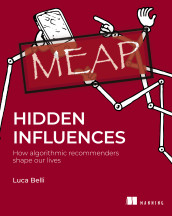
Hidden Influences
A computational approach that derives decisions or predictions from collected data rather than manually specified rules.
- How it is used
- Replaces manually specified recommendation rules with decisions inferred from user-item data.
- How deep it goes
- Defines machine learning, distinguishes explicit from implicit feedback, and begins describing collaborative filtering.
- Examples
- Uses dog-versus-cat interactions, ratings, likes, dwell time, clicks, and video completion as examples.
- What you can do after
- Understand how platforms infer preferences from interactions and use other users’ behavior to recommend items.
Also covered in
- Applied Reinforcement LearningIn early access (MEAP)
- Building LLM Applications with DSPy
- Grokking Statistics
- Effective Conversational AI
What to know first
- user experienceUser experience is a person’s overall perceptions and responses resulting from interacting with or using a product, service, or system.
- code reviewCode review is the systematic examination of source code or proposed changes to assess correctness, quality, risks, or conformance to requirements or standards.
- employee moraleEmployee morale is the collective confidence, motivation, enthusiasm, satisfaction, and emotional well-being employees have toward their work and organization.
Related concepts
- analysis-drivencontrasts with · An analysis-driven approach begins with reasoning about a question or objective before interpreting the available data.
- decision makinguses · Decision making is the process of selecting an action, outcome, or judgment from available alternatives based on information, objectives, or constraints.
- collaborative filteringincludes · Collaborative filtering is a recommendation technique that infers preferences or associations from interaction patterns among users, items, or other entities.
- model-based approachcontrasts with · A model-based approach represents a problem using explicitly designed assumptions, parameters, expert knowledge, and a model of system behavior.
- prompt programmingincludes · Prompt programming is a programming paradigm in which developers specify language-model inputs, expected outputs, and evaluation criteria in code rather than manually writing complete prompts.
- conflict resolutionused by · Conflict resolution is the process of addressing incompatible positions, decisions, or changes to reach an acceptable and consistent outcome.
Questions about data-driven approach
What is data-driven approach?
A data-driven approach bases decisions, conclusions, or system behavior substantially on collected or observed data rather than primarily on intuition or assumptions.
Which Manning books explain data-driven approach?
Think Like a Software Engineering Manager and Hidden Influences.
What should I know before learning data-driven approach?
Manning books that teach data-driven approach usually introduce user experience, code review, employee morale and headcount first.
What is the difference between data-driven approach and analysis-driven?
A data-driven approach bases decisions, conclusions, or system behavior substantially on collected or observed data rather than primarily on intuition or assumptions. An analysis-driven approach begins with reasoning about a question or objective before interpreting the available data.
What kinds of data-driven approach are there?
Kinds of data-driven approach include collaborative filtering and prompt programming.
These guides are generated from the text of Manning books by Manning's knowledge graph and link to the sections they draw on. The full books are available on liveBook and at manning.com.