Data engineering designs and operates the systems and processes that collect, transform, store, and deliver data for dashboards, reports, risk analysis, fraud detection, and AI. Its value depends on controlling the operational cost of pipelines and data systems, not merely accumulating data. section 14.0
The architectural problem evolves as organizations seek both scale and agility:
- Relational databases established structured ways to manage data; data warehouses then aggregated information across many operational sources for analysis. section 14.1.1
- Warehouses can make new-source ingestion difficult because rigorous modeling crosses business domains and is often handled by centralized teams without domain expertise. section 14.1.1
- Data lakes simplify ingestion, but shift complexity toward consumers when formats, countries, taxes, loyalty programs, and other source conditions change. section 14.1.1
- Modern data engineering therefore connects architecture with ownership, domain knowledge, and practices such as data mesh principles and data contracts. section 14.0
Auto-parts retail data
A store receipt may feed a loyalty-customer dataset, a store transaction, and separate B2B or B2C customer processes. Adding a loyalty program required another collection process in the warehouse; a lake made ingestion simpler but left consumers to handle changing formats and business rules. section 14.1.1
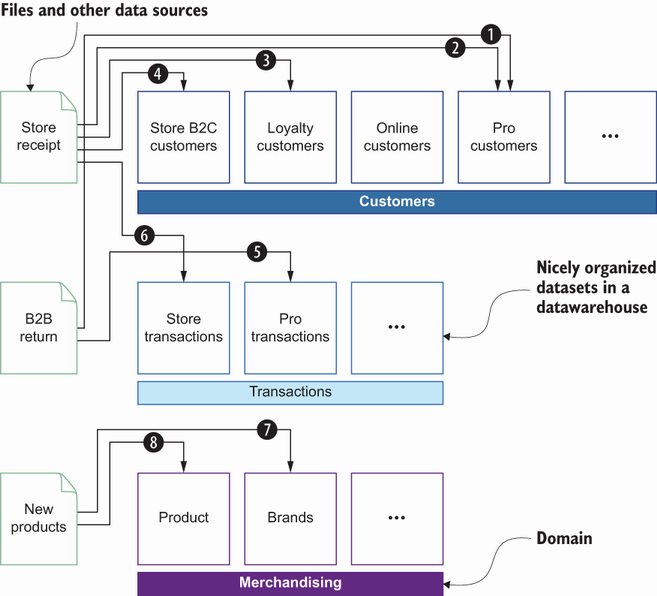
Use the warehouse ingestion diagram to trace how one receipt becomes several domain-specific data flows and why centralized ownership creates complexity. section 14.1.1

