Data quality measures whether data is accurate, consistent, complete, timely, and fit for its intended use. In practice, trust declines when datasets are inconsistent, poorly documented, or prone to silent errors, encouraging users to create risky personal silos. section 4.1.2
Lakehouse architecture treats data quality as an architectural and operational concern:
- Balance latency, throughput, transformation complexity, schema evolution, operational burden, and data quality when selecting ingestion models and tools. section 6.5
- Store data once in governed Apache Iceberg tables so BI tools, notebooks, and ML platforms share definitions without unnecessary duplication. section 9.1
Shared consumption layer
A lakehouse can serve analysts, engineers, and machine-learning teams from the same governed datasets. Avoiding departmental replication reduces latency, inconsistency, and additional failure points. section 9.1
Figure 9.1 In traditional architectures, different departments replicate data not only into their departmental warehouses but also between them, increasing latency and inconsistency in the data.
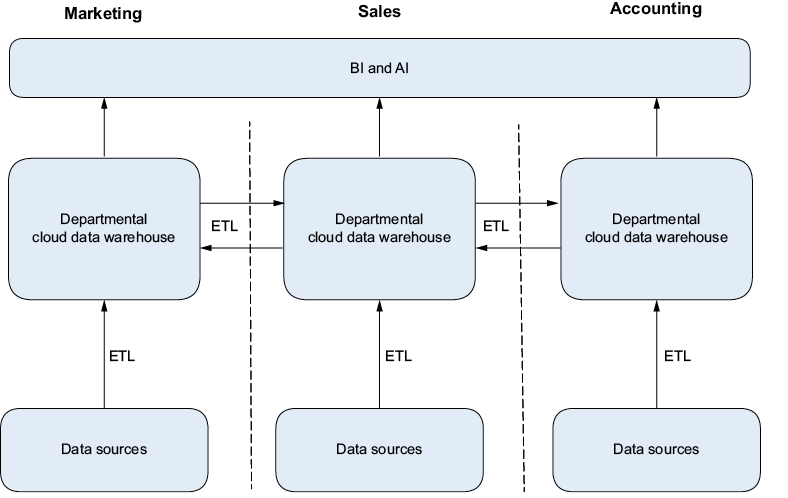
Trace how departmental replication increases latency and inconsistency, and how a shared lakehouse foundation addresses those problems. section 9.1









