Completeness
The degree to which all elements required by a defined scope or objective are present, represented, or covered.

The Well-Grounded Data Analyst
Completeness is the extent to which the expected records or attributes in a dataset are present and available.
- How it is used
- Assesses whether customer models and time series are suitable for specific analytical tasks.
- How deep it goes
- Works through missing attributes, unmatched records, geographic coverage, date ranges, and temporal gaps without offering a universal quality score.
- Examples
- Uses unmatched e-commerce customer IDs and traffic measurements across regions, locations, dates, and years.
- What you can do after
- Evaluate/understand whether available records and time periods support a proposed analysis, and communicate resulting limitations.
Read how The Well-Grounded Data Analyst explains completeness →

Architecting Autonomous Agentic Systems
Completeness is the presence of enough relevant evidence, constraints, provenance, and context to support an intended outcome for a decision and affected population.
- How it is used
- Defines completeness as a decision-relative data-quality test, not a count of populated fields, retrieved documents, or tokens.
- How deep it goes
- Specifies evidence, constraints, provenance, policy inputs, and population representation as criteria for judging completeness.
- Examples
- Uses a breach analysis missing contractual terms and loss evidence to illustrate incomplete inputs.
- What you can do after
- Evaluate whether evidence and population coverage support the intended decision.
Read how Architecting Autonomous Agentic Systems explains completeness →
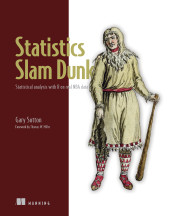
Statistics Slam Dunk
Incomplete data contains missing, blank, or otherwise unavailable values for one or more recorded fields.
- How it is used
- Guides data preparation by identifying records and seasons that could interrupt or weaken subsequent analysis.
- How deep it goes
- Demonstrates inspection and row filtering in R, but stops short of explaining imputation methods or completeness metrics.
- Examples
- Uses mostly blank draft records and low-count NBA seasons involving the Celtics and Lakers.
- What you can do after
- Apply it via R row deletion and vector filtering to create a more complete working dataset.

Building LLM Applications with DSPy
Completeness is the degree to which a summary includes the important information from its source document.
- How it is used
- Evaluates whether a generated summary covers the source document’s important ideas, complementing checks for factual grounding.
- How deep it goes
- Defines completeness as recall and demonstrates a DSPy judge that enumerates ideas, discusses overlap, and returns a score; full validation is deferred.
- Examples
- Uses a dialogue summary that scores 0.8 while omitting leadership-role and sports details.
- What you can do after
- Evaluate summary coverage with a DSPy LLM judge and combine its score with groundedness using an average or F1.
Read how Building LLM Applications with DSPy explains completeness →

Effective Data Analysis
Completeness is the degree to which all required data is present for the intended analysis or operation.
- How it is used
- Frames completeness as a data-quality check supporting reliable analytics, operations, and organizational decisions.
- How deep it goes
- Defines required-data checks and remediation options, but does not specify thresholds for acceptable missingness.
- Examples
- Uses page_views identifiers and timestamps, null-value tests, inferred means, and incomplete dataset rows.
- What you can do after
- Diagnose missing data and choose removal, inference, derivation, or pipeline validation before analysis.
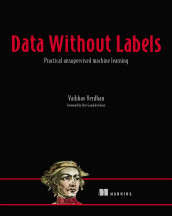
Data Without Labels
Completeness is a data-quality attribute indicating that required values, records, variables, and time periods are present.
- How it is used
- Assesses whether a dataset contains the values, variables, records, and periods needed for reliable machine-learning outputs.
- How deep it goes
- Defines completeness through missing values and data points, without detailing implementation checks or remediation procedures.
- Examples
- Uses annual sales data containing values for all 12 months as the completeness example.
- What you can do after
- Evaluate datasets by identifying missing values, variables, records, or time periods before relying on their outputs.

Think Distributed Systems
The property of a mental model in which every relevant fact of the system is represented in the model.
- How it is used
- Uses completeness to judge whether a mental model contains all facts relevant to a reasoning task.
- How deep it goes
- Defines relevance precisely, illustrates omission, and connects completeness to transactional Undo recovery.
- Examples
- Uses an electric circuit, light-bulb brightness, and a transactional money-transfer endpoint.
- What you can do after
- Evaluate whether a model omits facts needed for a specific prediction or system guarantee.
Also covered in
- Snowflake Data Engineering
- Build an Advanced RAG Application (From Scratch)In early access (MEAP)
- Software Design for Python Programmers
- Context EngineeringIn early access (MEAP)
- Clean Applications with Hexagonal ArchitectureIn early access (MEAP)
- Human-in-the-Loop Machine Learning: Active learning and annotation for human-centered AI
- Object-Oriented Software Design in C++
What to know first
- anomaly detectionAnomaly detection is the identification of observations, events, or behaviors that substantially deviate from expected patterns or a normal baseline.
- meanThe mean is a measure of central location equal to the arithmetic average of numerical observations, or the probability-weighted average of a random variable’s possible values.
- missing valueA missing value is an expected data value or observation that is absent, unavailable, unknown, or inapplicable.
- pipelineA pipeline is an ordered sequence of connected processing stages through which data or work flows, with each stage passing or transforming its output for subsequent stages.
Related concepts
- data qualitypart of · Data quality is the degree to which data meets requirements for accuracy, completeness, consistency, and suitability for its intended use.
- DSPy programmeasured by · A DSPy program is an executable composition of one or more module instances that can be called with inputs declared by a signature.
- signatureused by · A signature is a declarative specification of the expected input and output fields of a language-model task or operation.
- metrickind of · A metric is a quantitative measure that assigns values to a property or outcome so it can be assessed, compared, or monitored.
- database transactionproduced by · A database transaction is a bounded unit of database operations whose changes are treated as one logical whole, typically committed or rolled back together.
Questions about completeness
What is completeness?
The degree to which all elements required by a defined scope or objective are present, represented, or covered.
Which Manning books explain completeness?
The Well-Grounded Data Analyst, Architecting Autonomous Agentic Systems, Statistics Slam Dunk, Building LLM Applications with DSPy, Effective Data Analysis, Data Without Labels and Think Distributed Systems.
What should I know before learning completeness?
Manning books that teach completeness usually introduce anomaly detection, mean, missing value and pipeline first.
What is completeness a kind of?
Completeness is a kind of metric. A metric is a quantitative measure that assigns values to a property or outcome so it can be assessed, compared, or monitored.
What is completeness part of?
Completeness is part of data quality. Data quality is the degree to which data meets requirements for accuracy, completeness, consistency, and suitability for its intended use.
These guides are generated from the text of Manning books by Manning's knowledge graph and link to the sections they draw on. The full books are available on liveBook and at manning.com.