Data quality is the reliability of data for its intended use. In finance, inputs must be accurate and trustworthy: noisy, outdated, incomplete, or erroneous data can undermine LLM outputs and risk models. section 3.1.2 section 4.3.1
Protect data quality across the data asset layer:
- Decide how each feed enters the system, what transformations it receives, and how privacy constraints such as PII tokenization are enforced. section 4.3.1
- Separate data by speed, structure, and intended use, with stores and pipelines suited to historical analysis, real-time features, or specific modeling tasks. section 4.3.1
Figure 4.4 In the data asset layer multiple data sources—ranging from internal transaction logs and repayment histories to external credit bureau scores and alternative signals—flow into a centralized environment. Tools such as Airflow and Kafka manage real-time ingestion, while data lakes and specialized marts support segmentation, behavioral scoring, and performance tracking. Privacy, data quality, and governance mechanisms ensure compliance with regulatory standards throughout the pipeline.
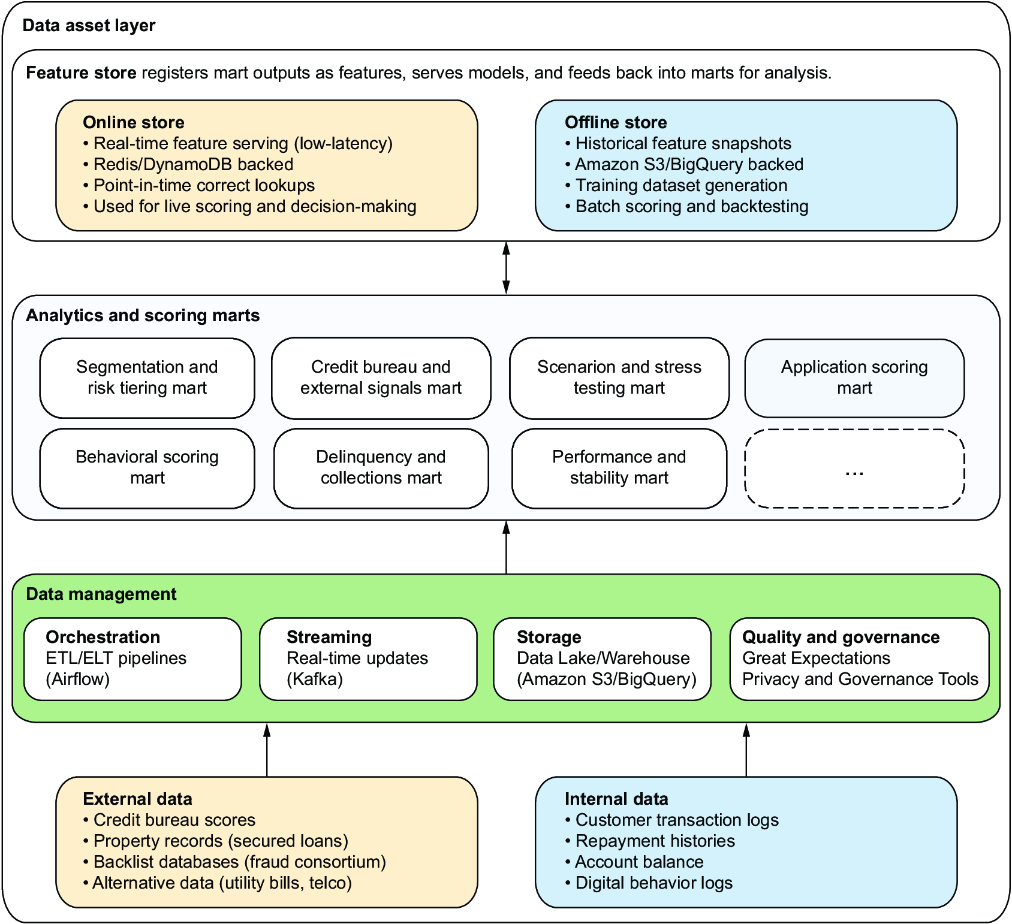
Trace how transaction records, repayment histories, bureau scores, and alternative signals pass through ingestion, storage, and specialized marts with privacy and governance controls. section 4.3.1









