liveBook · Manning

Dbt

As explained in Effective Data Analysis

dbt is an open-source tool that enables analytics engineers to transform data in a warehouse using SQL-based projects, testing, documentation, and software-development practices.

dbt is a SQL-centered tool for helping data teams collaboratively define and transform warehouse schemas and tables. It reduces the need to manage warehouse complexity directly. section 11.3.1

Teams use dbt models to:

  • Create tables for a specific team, such as product metrics. section 11.3.1
  • Expose data at source, analytics, and metrics layers with different levels of complexity. section 11.3.1
  • Update and augment core warehouse sources with newly added information. section 11.3.1

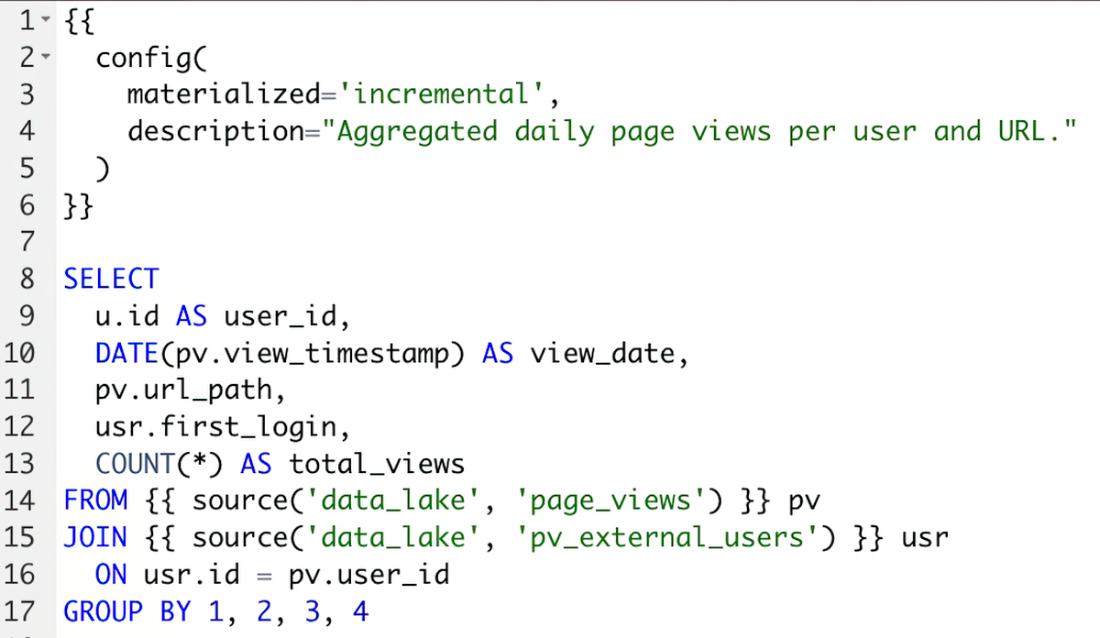
A dbt model

A model’s .sql file combines table metadata, a SQL query, and Jinja templating syntax for referencing other dbt models or warehouse sources. section 11.3.1

Figure 11.12 dbt combines SQL, table metadata, and Jinja templating syntax to define tables.
figure

The figure shows how SQL, table metadata, and Jinja templating syntax combine to define a table. section 11.3.1


How Effective Data Analysis covers it

How deep it goes
Explains models through metadata, SQL, and Jinja references, but stops short of detailed warehouse implementation or advanced dbt features.
Examples
Uses product-team metrics, source-to-metrics layers, and a model file combining SQL, metadata, and Jinja.
What it assumes
Assumes comfort writing SQL and introduces table metadata and Jinja references within model files.
What you can do after
Apply dbt to define warehouse tables for teams, organize data into layers, and reference related models or sources.
How it connects
Connects SQL with data warehouses, schemas, tables, data layers, and Jinja templating.

Also explained in

Compare how 3 books explain dbt →

Related concepts

This explainer was generated by Manning's knowledge graph from the text of Effective Data Analysis. The section links point to the parts of the book it draws on.
