A default value supplies a parameter when an API consumer omits it. Defaults reduce request complexity, but only when the implementation can determine a safe value without losing accuracy. section 9.4.4
Money transfer defaults
A transfer needs source, destination, and amount. The implementation can infer an immediate transfer when no date or frequency is supplied, use the source account’s currency when currency is omitted, start a recurring transfer today, and continue it when endDate is absent. Do not default values the server cannot know accurately, such as a payment transaction’s execution timestamp. section 9.4.4
Use defaults deliberately across request design and consumer-facing documentation:
- Keep parameters optional when the implementation can infer them reliably; avoid making semantically important data optional merely to shorten requests. section 9.4.4
- Declare static defaults with JSON Schema’s default keyword; for example, an omitted limit can default to 100. section 19.3.2
- Return effective defaults in list metadata so consumers know the applied page size, sort order, and other parameters. section 9.6.7
- Keep filters optional and do not assume they require defaults; an unfiltered account-transaction request can return all transactions. section 9.6.4
Figure 9.7 We minimize money transfer inputs by determining data based on other data and using default data.
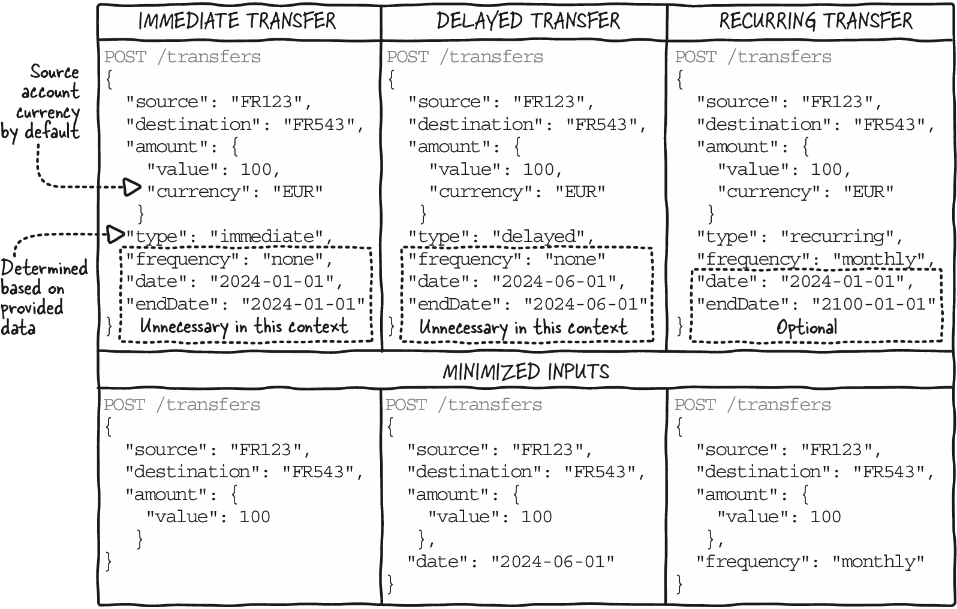
Use the transfer-input diagram to compare explicitly supplied data, inferred transfer types, and server-provided defaults. section 9.4.4



















