liveBook · Manning

Dependency injection

As explained in Crack Any Codebase with AI

Dependency injection is a technique in which an object's required collaborators are supplied from outside rather than created or imported directly.

Dependency injection supplies an object's collaborators from outside instead of creating or importing them directly. In VS Code, it lets hundreds of services find one another without hard-coded imports. section 3.1

VS Code services and extensions

Themes, languages, and files act as services that can locate one another, while extensions can swap in their own implementations. The payoff is replaceable collaboration rather than fixed imports. section 3.1

Figure 3.2 The ten core abstractions in VS Code, distilled from 10,000 files. The arrows show a recommended learning path, starting with foundational code like Resource Cleanup and ending with visible UI like the Workbench Layout.
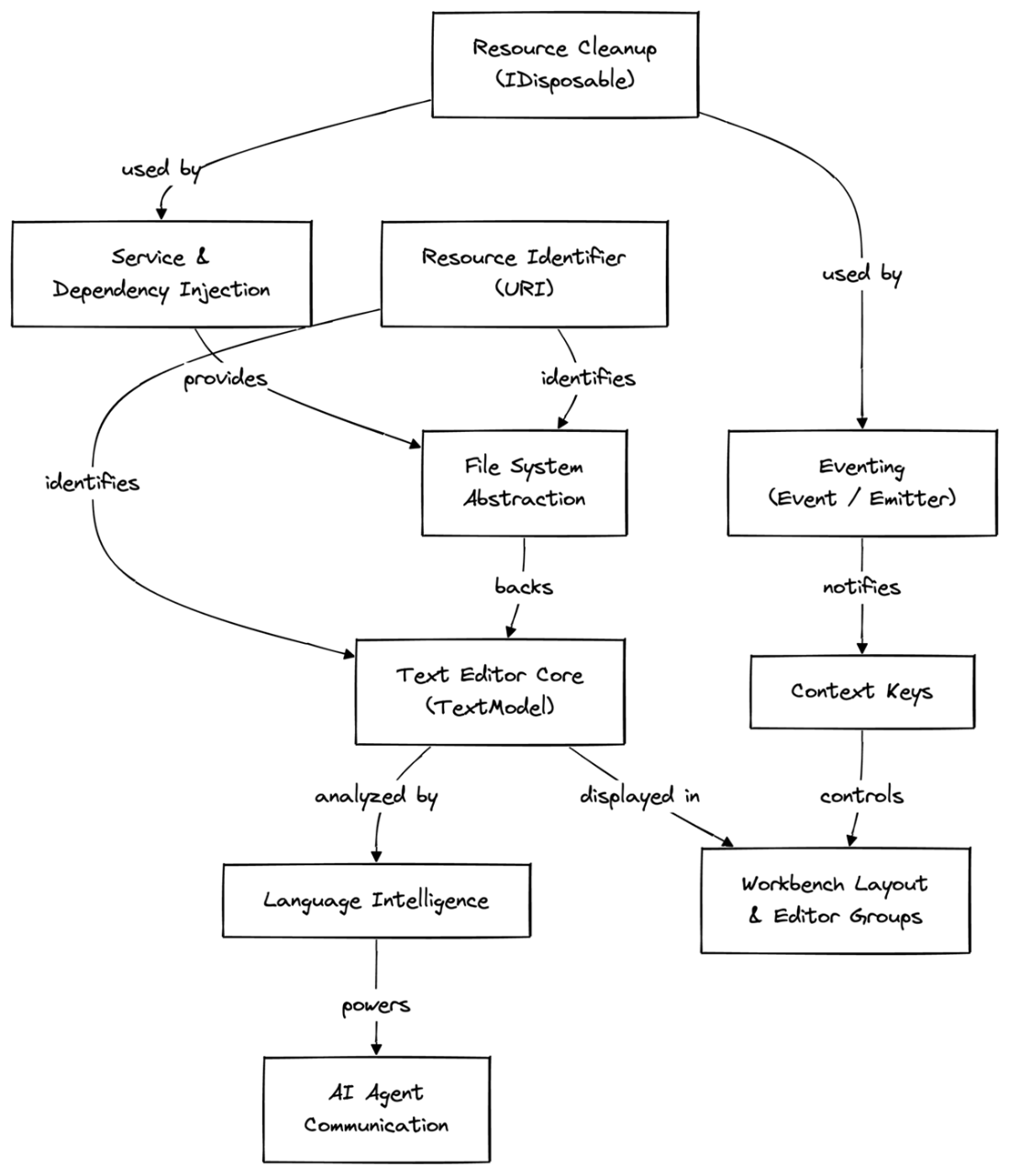
Use the architecture map to place dependency injection among VS Code's ten core abstractions and follow its dependencies as a learning path. section 3.1


How Crack Any Codebase with AI covers it

How deep it goes
Explains the architectural purpose through a production-scale example but stops short of implementation mechanics or configuration steps.
Examples
Uses VS Code themes, languages, files, and extension-provided implementations as concrete service examples.
What you can do after
Evaluate how a large codebase enables service collaboration and extension-level implementation replacement.
How it connects
Connects dependency injection with services, extensions, implementations, and hard-coded imports.

Also explained in

Compare how 28 books explain dependency injection →

Related concepts

This explainer was generated by Manning's knowledge graph from the text of Crack Any Codebase with AI. The section links point to the parts of the book it draws on.