Diversity, equity, and inclusion guide organizations toward broader representation, fairer opportunities, and a stronger sense of belonging. For lead developers, this means building collaborative teams, valuing different perspectives, and treating inclusive leadership as an evolving professional skill rather than a finished lesson. section 12.1.3
Practical ways to support diversity, equity, and inclusion include:
- Examine hiring decisions for unconscious bias and ask recruiters to provide a wider range of candidates. section 1.1
- Welcome perspectives from people with different genders, races, cultures, education levels, and career paths. section 12.1.3 section 1.1
- Review technical language as workplace expectations change, replacing terms such as master/slave and blacklist/whitelist with alternatives such as main/secondary and disallowed/allowed. section 12.1.3
- Keep learning through current leadership writing, relevant books, and communities that support underrepresented developers. section 12.1.3 section 1.1
Testing for representation
Facial-recognition systems that failed to recognize dark-skinned people illustrated the cost of testing with an overly narrow group of subjects. Inclusive teams can question who is represented in test data, hiring pools, and everyday discussions before similar omissions become product or workplace problems. section 12.1.3
Figure 12.2 How to cultivate a positive working environment
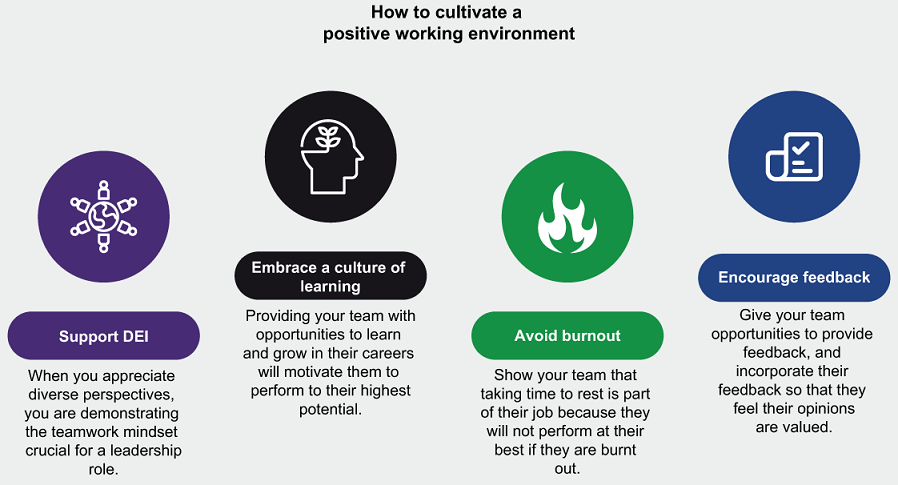
Use the workplace-environment figure to connect inclusive leadership with collaboration, motivation, diverse perspectives, and team success. section 12.1.3
Figure 1.1 Developer Demographics – USA (Source: www.bls.gov/cps/cpsaat11.htm)
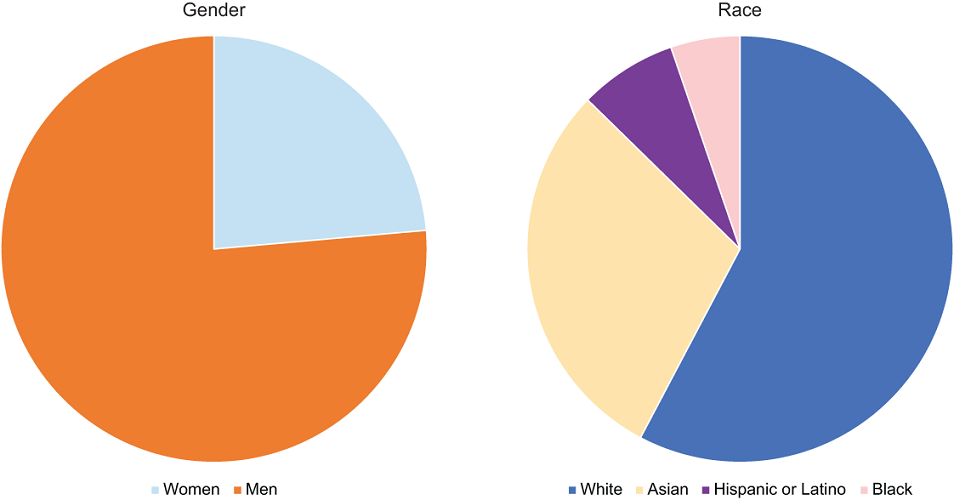
Use the demographic figure to examine representation among developers in the United States. section 1.1
Figure 1.2 Developer Demographics – Worldwide (Source: https://survey.stackoverflow.co/2022/#demographics-gender-prof)
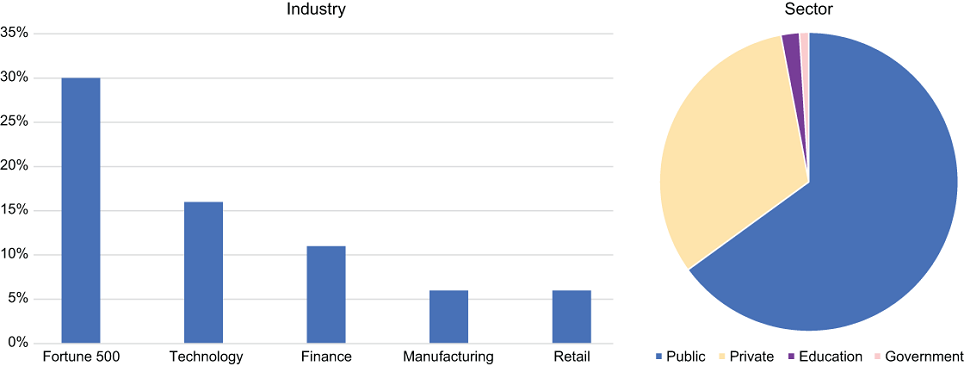
Use the worldwide demographic figure to broaden discussion of representation across global developer communities. section 1.1

