The Domain Name System (DNS) translates memorable domain names, such as www.example.com, into numeric IP addresses that computers use to locate network resources. section 11.2 section 11.5.3
A typical lookup works like this:
- The device checks whether it already has the address stored locally. section 11.5.3
- If needed, it asks a DNS resolver, which follows referrals from root DNS servers to a top-level domain server and then an authoritative DNS server. section 11.5.3
- The resolver returns the address, and the device uses it to connect to the website. section 11.5.3
A familiar web address
A lookup for www.example.com can return the IPv4 address 192.0.2.162, which the device can use to reach the website. section 11.5.3
Figure 11.8 Illustration of a sequence DNS queries to translate a domain name to an IP address
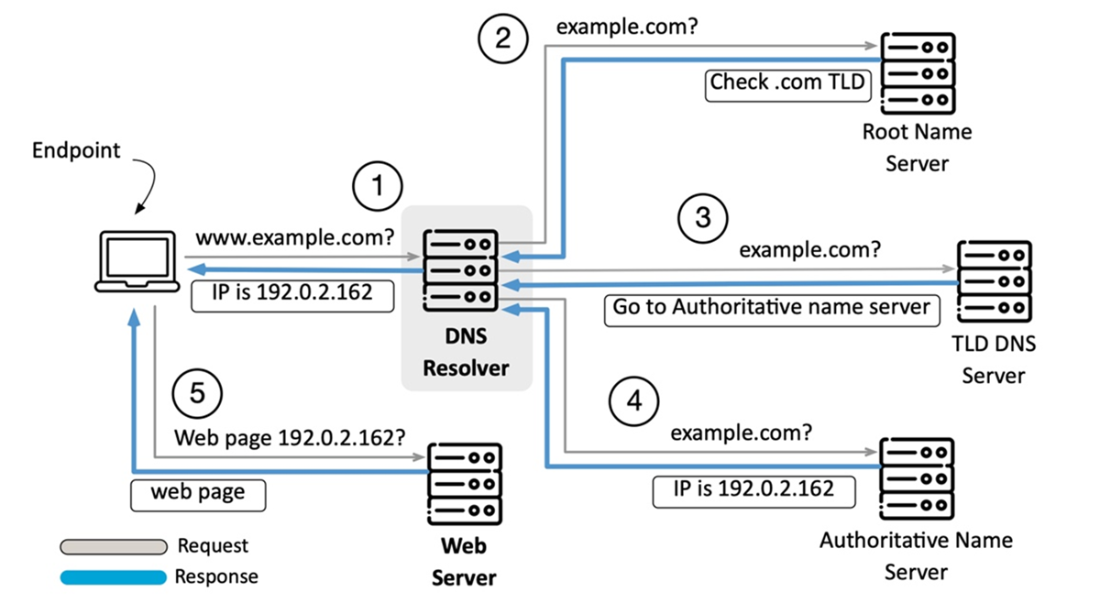
The diagram illustrates the sequence of DNS queries that translates a domain name into an IP address. section 11.5.3







