Drug discovery identifies and characterizes chemical or biological entities that could become medicines. It addresses a difficult search problem: candidates must act on biological targets while satisfying demanding safety and efficacy requirements. section 1.0 section 1.1.1
A target may be a protein, nucleic acid, lipid, or carbohydrate whose activity should be modulated. Candidate molecules and targets both change conformation, and their association is characterized by binding affinity. Machine learning and deep learning help prototype and screen candidates more rapidly. section 1.0 section 1.1.1
A practical drug-discovery pipeline moves through these stages:
- Target identification or selection and validation section 1.4
- Hit discovery, followed by hit-to-lead or lead identification section 1.4
- Lead optimization and preclinical development section 1.4
- Drug development, clinical trials, regulatory review, and market launch after discovery phases section 1.4
Figure 1.1 Drug discovery can be thought of as a difficult search problem that exists at the intersection of the chemical search space of 1063 drug-like compounds and the biological search space of 105 targets.
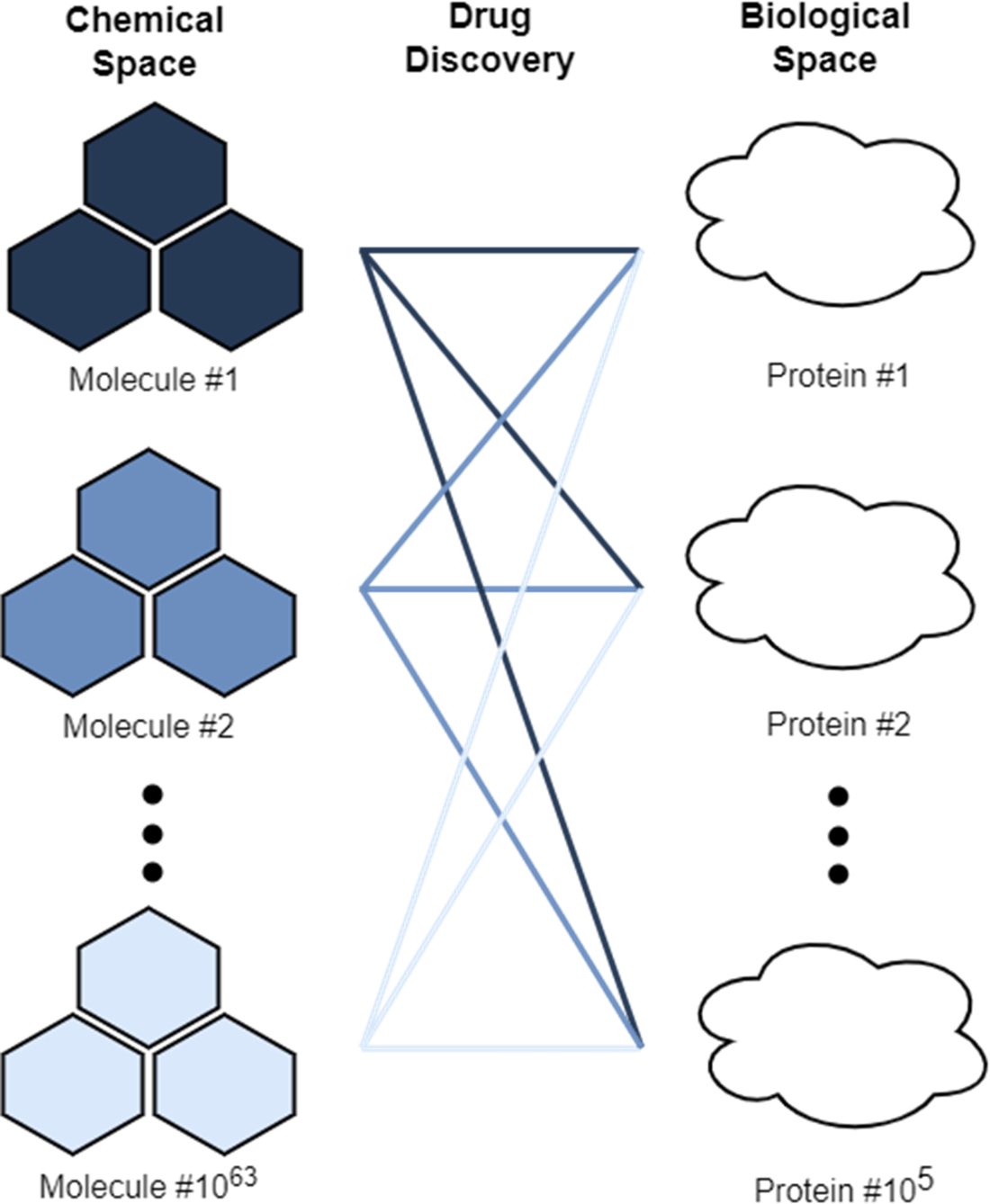
Use the figure to visualize drug discovery as the intersection of an enormous chemical search space with a complex biological target space. section 1.1.1
Figure 1.11 We can breakdown drug design into target identification and validation, hit discovery, hit-to-lead (lead identification), lead optimization, and preclinical development. Once a drug candidate has progressed to the drug development stage, it will need to pass multiple phases of clinical trials testing safety and efficacy prior to submission to and review by the FDA and launch to market.
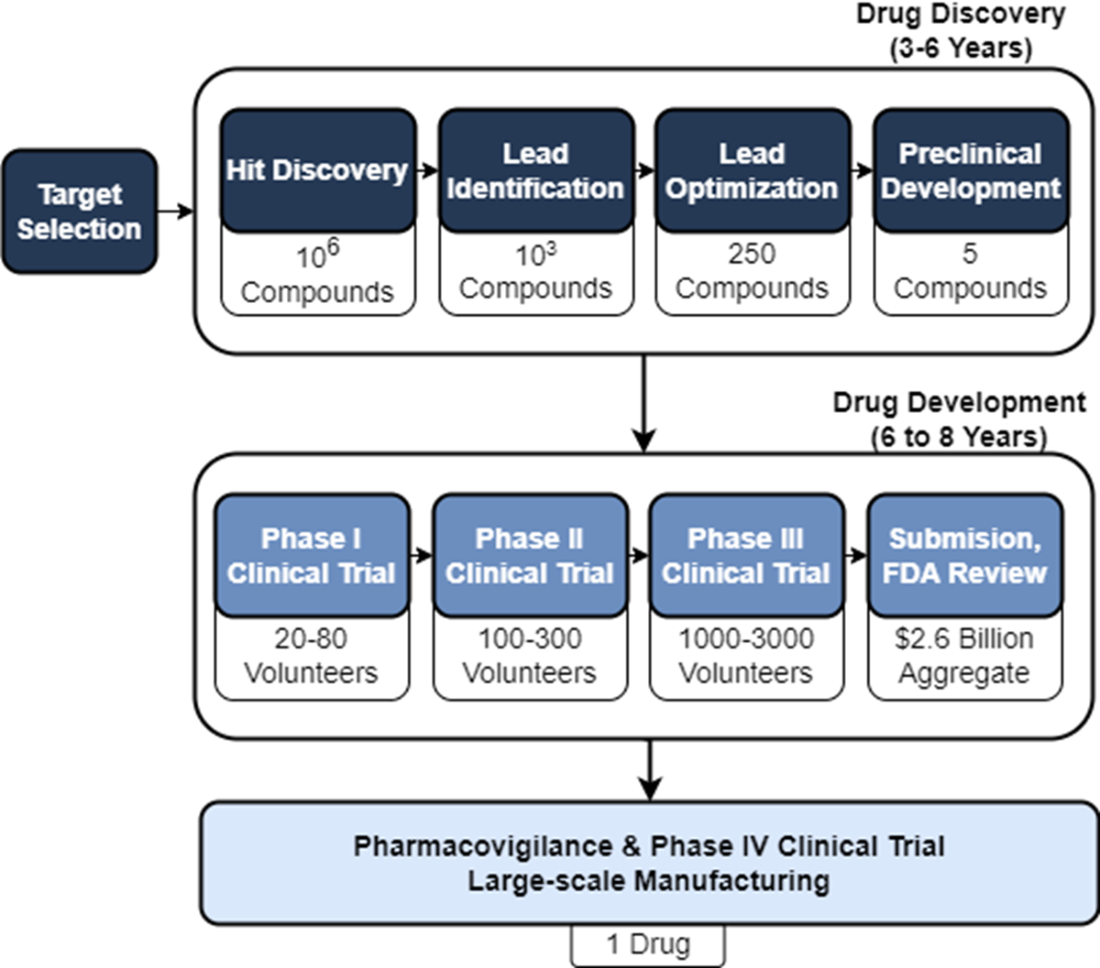
Use the workflow figure to distinguish discovery phases from the later clinical and regulatory process of drug development. section 1.4
