liveBook · Manning

Study design

As explained in Google Anthos in Action

A/B testing is an experimentation technique that compares multiple variants of an application or service by exposing them to different user groups or requests.

A/B testing compares service versions by directing different portions or categories of production traffic to each variant. In Anthos Service Mesh, traffic management supports gradual releases without disrupting end users. section 4.5.3

Use traffic management to:

  • Send a small percentage of traffic to a new service version, verify its behavior, and increase its share progressively. section 4.5.3
  • Route requests by predefined rules, such as user-agent, while keeping the established version active for other users. section 4.5.3
  • Use the approach for bug fixes, new features, canary deployments, and progressive rollouts without requiring application code changes. section 4.5.3 section 4.8

Canary release

Redirect 5% of traffic to a new release of Service A. If the release performs acceptably, increase its traffic share until it receives all traffic; otherwise, retain the established version. section 4.5.3
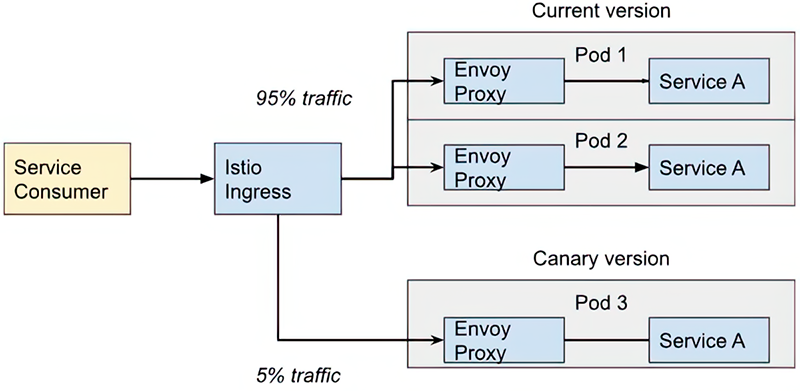
Figure 4.7 Istio canary deployment feature based on traffic
04-07

Visualizes an Istio canary deployment that splits traffic between service versions. section 4.5.3
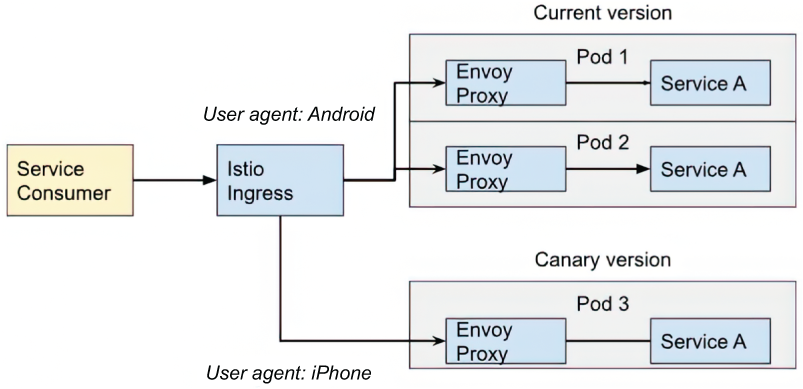
Figure 4.8 Istio canary deployment feature based on user-agent
04-08

Visualizes an Istio canary deployment that targets iPhone traffic using user-agent routing. section 4.5.3


How Google Anthos in Action covers it

How deep it goes
Explains percentage- and rule-based traffic splitting with rollout rationale, but stops short of configuration commands or implementation syntax.
Examples
Uses a 5% Service A canary and user-agent routing for iPhone traffic as concrete deployment examples.
What you can do after
Operate/configure progressive service releases by splitting traffic between versions through Anthos Service Mesh.
How it connects
Connects A/B testing with traffic routing, canary deployments, progressive rollouts, service meshes, and Envoy sidecars.

Also explained in

Compare how 7 books explain study design →

Related concepts

This explainer was generated by Manning's knowledge graph from the text of Google Anthos in Action. The section links point to the parts of the book it draws on.




